There are villages that feel like destinations, and villages that feel like thresholds. Yoxford is both. For generations it has been a stopping point on the route north and south through Suffolk, and at the same time a self-contained place with its own rhythms: church bells, local trades, a school run, the steady presence of farms and woodland at the edge of the streets. To look up yoxford suffolk england is often to search for something practical. Where is it? What is it like to live there? Is it a good base for the coast? The answers are tied to geography and history in equal measure.
Yoxford sits in East Suffolk, not far from Saxmundham and within reach of the coast at Dunwich, Walberswick and Southwold. It lies on the A12, the main arterial road that carries traffic between Ipswich, Lowestoft and the wider East Anglian network. That single fact has shaped the village’s identity more than any brochure description could. Roads make places visible and vulnerable. They bring passing trade, but also noise and speed. They connect a village to jobs and services, but they can slice through community life if crossings and pavements are inadequate.
What makes Yoxford interesting is that it has never been merely a roadside settlement. It has a long story as a parish and local centre, tied to the agricultural landscapes of Suffolk and to the distinct cultural character of the county: a blend of prosperous farmland, old market networks, nonconformist tradition, and an enduring sense of place. Today, as East Suffolk changes under pressure from housing demand, tourism and infrastructure projects along the coast, Yoxford is quietly adapting again.
Where Yoxford sits, and why the A12 matters
On a map, Yoxford looks straightforward: a village on the A12, a few miles inland from the North Sea, located between the larger settlement of Saxmundham to the south and the coastal hinterland to the east. In practice, it is best understood as a junction point. The village sits close to routes that fan out to smaller communities such as Peasenhall and to coastal landscapes that draw visitors year-round.
The A12’s importance is not just about travel time. It influences everything from air quality to land values. It also shapes how people experience Yoxford. Some encounter the village as a line of buildings glimpsed through a windscreen, a place to slow down briefly before accelerating again. Others use it as a daily anchor, living nearby and driving out to work, school or shops. For local businesses, the road can provide a flow of customers that a purely rural village might not sustain.
At the same time, dependence on a trunk road can create a particular kind of fragility. When roadworks or collisions disrupt the A12, the effects ripple through local life. Back roads fill with diverted traffic. Buses run late. Delivery schedules slip. Residents plan their days around a road they do not control.
That is why, in any serious discussion of yoxford suffolk england, transport is not a side issue. It is a structural feature.
A Suffolk village with a long parish history
Like many East Anglian settlements, Yoxford’s history is written in layers. The place-name itself hints at early origins, rooted in the language of crossings and land use. “Ford” names often indicate a point where people and animals could cross water, and such points mattered in a landscape where rivers, marshy ground and seasonal flooding could make travel unpredictable.
Over centuries, Yoxford developed as a parish community connected to farming and to the wider network of Suffolk villages and small towns. In East Anglia, wealth was often distributed in a pattern that produced strong parish churches, distinctive vernacular architecture, and a long tradition of local institutions. Yoxford fits that pattern, not as a showy example but as a typical one: a village with a historic core and a sense of continuity.
That continuity can be felt in the way older houses sit close to the road, in the shape of the village centre, and in the way fields and lanes press in at the edges. Even where modern development has added housing, the older grain remains visible. Yoxford has grown, but it has not become anonymous.
Architecture and streetscape: timber frames, brick and the feel of East Suffolk
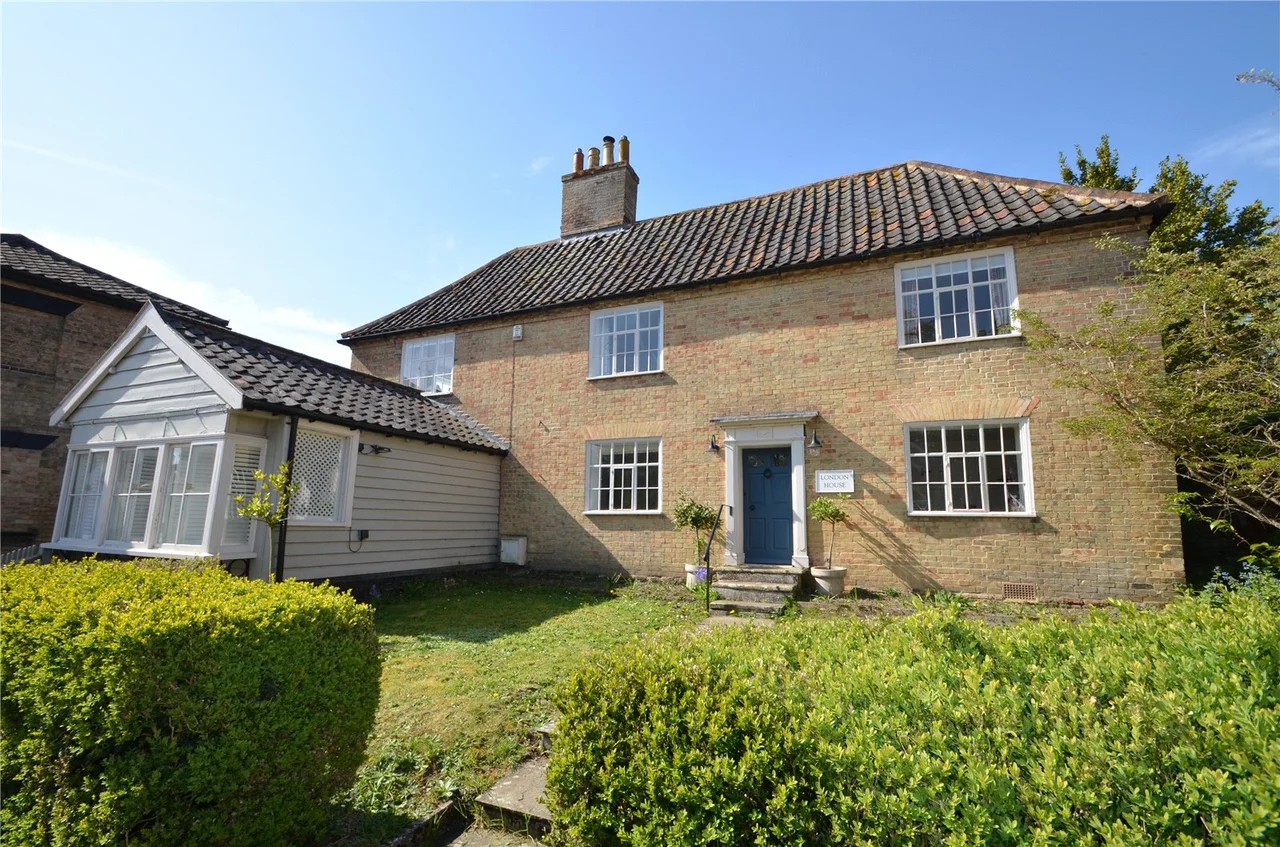
Suffolk villages are often admired for their building traditions, and for good reason. The county has a rich mix of timber-framed houses, later brick buildings, and the subtle variations that come from local materials and changing fashion. In Yoxford, the streetscape reflects that blend. You see the practical, sturdy language of rural East Anglia: gables, chimneys, walls that have weathered into softer colours, and buildings that were constructed to last because replacement was costly.
The village’s setting on a main road adds another layer. In older periods, a village on a through route might develop coaching inns and services for travellers, and while the age of coaches is gone, the pattern of roadside hospitality and trade has left its mark. Buildings along the main road often feel outward-facing, built to be seen and entered, not hidden behind long drives. That is a different aesthetic from estate villages where houses were arranged for picturesque effect rather than function.
Yoxford’s character, then, comes less from any single monument and more from the cumulative effect of its built fabric. It feels like a working place that has adapted rather than a place frozen in an idealised past.
The village economy: local services, passing trade and employment patterns
In the modern rural economy, villages survive when they can maintain a basic range of services and when residents can access employment within reasonable distance. Yoxford benefits from its road position, but it also sits within an East Suffolk labour market that has changed significantly over recent decades.
Agriculture remains part of the surrounding landscape, though farming employs fewer people directly than it once did. Many households now rely on work in nearby towns, in care and education, in trades, in small professional services, or in larger employment centres such as Ipswich and, for some, Norwich. Commuting is therefore built into daily life, and the car is often essential.
Passing trade can support certain businesses, but it is not a guaranteed foundation. A fast road brings volume, yet it also brings competition: people may drive through without stopping, or choose larger retail centres with easier parking. Villages on main routes often have to work harder to convert passing movement into local custom. That can be difficult, especially as online shopping reduces footfall and as rural services face rising costs.
What is noticeable in places like Yoxford is the growth of mixed livelihoods. People combine part-time local work with commuting, or run small enterprises from home. That pattern has been strengthened by remote working, which has allowed some residents to live in East Suffolk without daily travel. But remote work is not evenly distributed across occupations, and it can change the social balance of a village if it brings in higher incomes without directly supporting local services.
In yoxford suffolk england, these shifts are not abstract. They show up in housing demand, in the use of village amenities, and in the expectations people have of rural life.
Community life and demographics: who lives in Yoxford now?
Village demographics across Suffolk have been shaped by two competing forces. One is ageing: many rural areas have a higher proportion of older residents, driven by people staying put and by in-migration of retirees. The other is family settlement, particularly where villages remain relatively affordable compared with the South East commuter belt further west.
Yoxford sits in the middle of these trends. Its access to the A12 makes it practical for working-age households, while its proximity to the coast and to attractive countryside can draw older incomers. The result is often a varied population, but one where housing costs and availability can make it difficult for younger adults raised locally to remain.
Community life in such a setting depends on the presence of shared institutions. A village school, local clubs, and the informal social networks that develop through repeated contact can provide cohesion. But cohesion is not automatic. It is influenced by how many people commute long distances, how many are at home during the day, and whether there are spaces where different age groups and backgrounds mix.
The quieter risk for villages like Yoxford is not dramatic change but gradual thinning: fewer services, fewer meeting points, more reliance on cars, and a slow drift towards a place that is pleasant to live in but less able to sustain a shared civic life. Countering that requires attention not only from councils and planners but from residents themselves, because the viability of village institutions often rests on volunteering and local participation.
Education and healthcare: rural access in practice
For families considering a move, practical questions tend to cluster around schools and healthcare. In East Suffolk, as in much of rural England, access is shaped by distance and transport. Primary provision may be local or nearby, while secondary schooling usually involves travel to larger settlements.
Healthcare access is similarly structured. GP services are often based in towns, with branch surgeries and appointment systems that can feel stretched. The reality of rural provision is that services must cover wide areas with limited workforce, and patients often travel further than they would in a city. For older residents, that can become challenging, particularly where public transport is limited.
These pressures are felt in villages like Yoxford because they sit at the interface between rural and semi-rural life. Residents are close enough to larger services to use them, but far enough away that the journey becomes a factor in daily planning. That is one reason the A12’s reliability matters so much. When the road is slow, the village feels further from everything.
The coastal hinterland: Yoxford’s relationship with tourism and nature
Yoxford is inland, but it sits close to some of Suffolk’s most visited coastal landscapes. Dunwich, with its haunting history of a lost medieval town, lies within easy reach. Walberswick and Southwold attract visitors with their beaches, walking routes and cultural pull. The Suffolk coast and heaths, along with the wider network of nature reserves, draw birdwatchers, walkers and those seeking quieter scenery than the busier parts of the East Anglian coast.
This proximity influences Yoxford in subtle ways. It can increase seasonal traffic through the village, especially in summer. It can also shape local business patterns, with some services benefiting from visitors who choose to stay inland or to stop en route. Yet tourism also brings familiar challenges: parking pressure, strain on roads, and the risk that housing becomes oriented towards short-term letting rather than long-term residency.
Yoxford’s position slightly back from the coast can act as a buffer. It does not experience the intensity of visitor footfall that coastal villages do. But it cannot escape the wider coastal economy. East Suffolk’s identity is increasingly bound up with its natural assets, and villages like Yoxford form part of the supporting network that makes coastal access possible.
Energy and infrastructure: the shadow of Sizewell and regional development
Any honest portrait of this part of Suffolk must acknowledge the presence of major energy infrastructure on the coast, most notably at Sizewell. Large projects and long-term industrial sites shape the region’s economy, transport and planning in ways that reach far inland. They influence traffic patterns, housing demand for workers, and the political debate about growth versus environmental protection.
Yoxford, being within the broader east Suffolk area, can feel the effects indirectly. Increased demand for accommodation and services can ripple out from coastal infrastructure projects. Road corridors become more heavily used. Local authorities face complex planning decisions about where new housing should go and how to manage cumulative impact.
For residents, this can create a sense of living near big national decisions without being at their centre. It can also sharpen questions about what kind of future East Suffolk wants: one in which rural character is protected at all costs, or one in which growth is managed and accommodated. Most people fall somewhere between those extremes, supporting investment and jobs while wanting the countryside and village life to remain liveable.
In the context of yoxford suffolk england, these debates matter because they influence everything from road upgrades to housing allocations, and therefore the shape of village life for decades.
Housing and planning: balancing need, character and infrastructure
Like much of Suffolk, Yoxford faces the familiar tension between housing need and rural character. People want homes that local wages can support, including housing for young families and key workers. At the same time, residents often worry about scale, design and whether roads, drainage and services can cope.
Planning in villages on main roads carries particular complexities. New housing can increase traffic and make crossings more dangerous if pedestrian infrastructure is not improved. It can also alter the feel of the village, stretching the built-up area and weakening the sense of a clear boundary between settlement and countryside.
The quality of development matters as much as quantity. Housing that connects with existing streets, provides safe walking routes, and respects the local building vernacular tends to integrate better than estates that feel like bolt-on additions. In East Anglia, where the landscape is open and the skies are large, the relationship between buildings and setting is especially visible. Poorly planned growth can look out of place quickly.
There is also the question of tenure. If new housing leans heavily towards higher-end properties, it may increase overall value but reduce social balance. If it includes a mix of sizes and affordability levels, it is more likely to support a resilient community. These are difficult decisions, often shaped by national policy and developer economics as much as by local preference.
Conclusion
Yoxford is a village defined by connection. It sits on a main road, close to the coast, and within reach of the towns that supply work and services. Yet it retains the feel of a Suffolk parish with a long memory, expressed in its buildings, its lanes and its landscape setting. To understand yoxford suffolk england is to see it as both a place people pass through and a place people belong to, shaped by the practicalities of the A12 and the slower continuity of rural life.
Its future, like that of many East Suffolk communities, will depend on how well growth is managed, how transport pressures are handled, and whether the village can sustain the services and shared institutions that make it more than a line of houses on a busy route. The interest of Yoxford lies in that balance: between movement and settlement, between the pull of the coast and the steadiness of farmland, and between a historic village identity and the demands of a region that is still changing.