In Britain, mining is often spoken about in the past tense. Coalfields are now heritage trails; tin mines are visitor sites; the language of pits and seams has faded from everyday speech. Yet the minerals that underpin modern life have not disappeared. They have simply moved out of sight, embedded in batteries, wind turbines, data centres and the infrastructure of an electrified economy. In that context, the Royal School of Mines retains a relevance that can surprise people who assume it belongs only to the age of steam and empire.
The name carries a particular weight. It suggests a formal, almost ceremonial institution, and in one sense that is accurate: the Royal School of Mines has roots in a nineteenth-century state project to professionalise science, train engineers, and support an industrial economy hungry for resources. But the story is not a simple arc from coal and copper to decline. Instead, it is a case study in how technical education adapts. Over time, “mines” became shorthand for a broader set of disciplines: geology, metallurgy, petroleum, geotechnics, environmental engineering and, increasingly, the science of managing Earth systems under pressure.
For most people today, the Royal School of Mines is encountered in one of two ways. It is either a historical institution linked to Britain’s industrial peak, or it is a living identity within Imperial College London’s earth science and engineering community. Both are true, and the tension between them is part of what makes the school worth understanding.
What the Royal School of Mines is today
The Royal School of Mines is most closely associated with Imperial College London and, in academic terms, with the training and culture surrounding the earth sciences and engineering disciplines that evolved from mining education. It is not always a standalone “school” in the way a modern university faculty is. Rather, it is a legacy institution that continues through departmental structures, student identity, alumni networks and the professional formation of engineers and geoscientists.
For a prospective student or a UK reader trying to interpret the name, the important point is that the Royal School of Mines is not simply a place where people learn how to dig holes in the ground. It is better understood as a historical core around which modern fields have grown: the study of the Earth, its resources and its risks, and the engineering required to interact with it responsibly.
That modern framing matters because it explains why the “mines” identity persists at a time when mining is politically sensitive and, in many communities, emotionally loaded. The school’s lineage is tied to extraction, but its contemporary concerns extend to safety, environmental impact, resource efficiency, remediation and the transition to low-carbon systems.
Why it was founded: science, the state and industrial anxiety
The Royal School of Mines emerged from a Victorian belief that Britain needed to organise knowledge as a national asset. The mid-nineteenth century was an era of industrial confidence, but also of competitive fear. Continental Europe was developing technical universities and state-backed scientific institutions. Britain, by contrast, had world-class scientists and engineers, but its educational system for applied science was uneven and often informal.
Mining sharpened the issue. Extractive industries were central to the British economy, and the consequences of poor practice were severe: explosions, collapses, flooding, toxic exposure and the loss of life on an appalling scale. At the same time, mining and metallurgy were becoming more complex technically. A modern industrial nation required surveyors, assayers, geologists, metallurgists and engineers with formal training.
The Government School of Mines, established in the early 1850s, was part of the state’s response. Its creation was entangled with the wider drive to improve scientific education that followed the Great Exhibition of 1851 and the growing sense that Britain needed to systematise innovation rather than relying on individual genius. The subsequent adoption of the “Royal School of Mines” name signalled prestige, but it also signalled purpose: this was not a gentleman’s club of curiosity; it was an institution designed to support industry and the state.
Early teaching and the making of professional expertise
The Royal School of Mines belonged to an age when disciplines were still forming. The boundaries between chemistry, geology and engineering were more permeable than they seem now, partly because the practical problems of mining forced them together. You could not treat a mine as purely an engineering challenge without understanding the geology; you could not process ores efficiently without chemistry and metallurgy.
This period also saw the rise of formal scientific teaching in London. Institutions clustered around South Kensington and central London, with museums, laboratories and lecture halls creating a civic infrastructure of knowledge. The mining school’s links with the Museum of Practical Geology and its later relationship with the South Kensington science institutions reinforced the idea that industrial education should sit close to collections, research and public science.
The staff and students of the era included figures who helped establish geology and related sciences as rigorous fields. For a modern reader, the significance lies less in individual names than in what the school represented: a training ground for professionals who would work in a global economy, often in difficult, dangerous environments, and who needed both scientific understanding and practical judgement.
Empire and extraction: an uncomfortable but central chapter
Any serious account of the Royal School of Mines has to confront its imperial context. Britain’s nineteenth- and early twentieth-century economy relied heavily on global resource flows, and mining was deeply enmeshed with colonial power. Engineers and geologists trained in Britain often worked in territories controlled or influenced by British interests, where extraction was tied to trade, infrastructure and political authority.
That history has two sides. On one hand, technical expertise produced genuine advances in safety, surveying, metallurgy and the understanding of the Earth. On the other, it served a system that frequently prioritised imperial wealth over local autonomy, and that often imposed harsh labour conditions on colonised populations. Mining communities across the world carry scars from that era, both environmental and social.
For the Royal School of Mines, this imperial chapter matters because it shaped the school’s reach and reputation. It also explains why the institution is frequently present in the biographies of engineers and administrators who worked across the British Empire. The global network was part of the school’s prestige. It is also part of the moral complexity that modern institutions must acknowledge when they tell their own histories.
Incorporation into Imperial College and the South Kensington identity
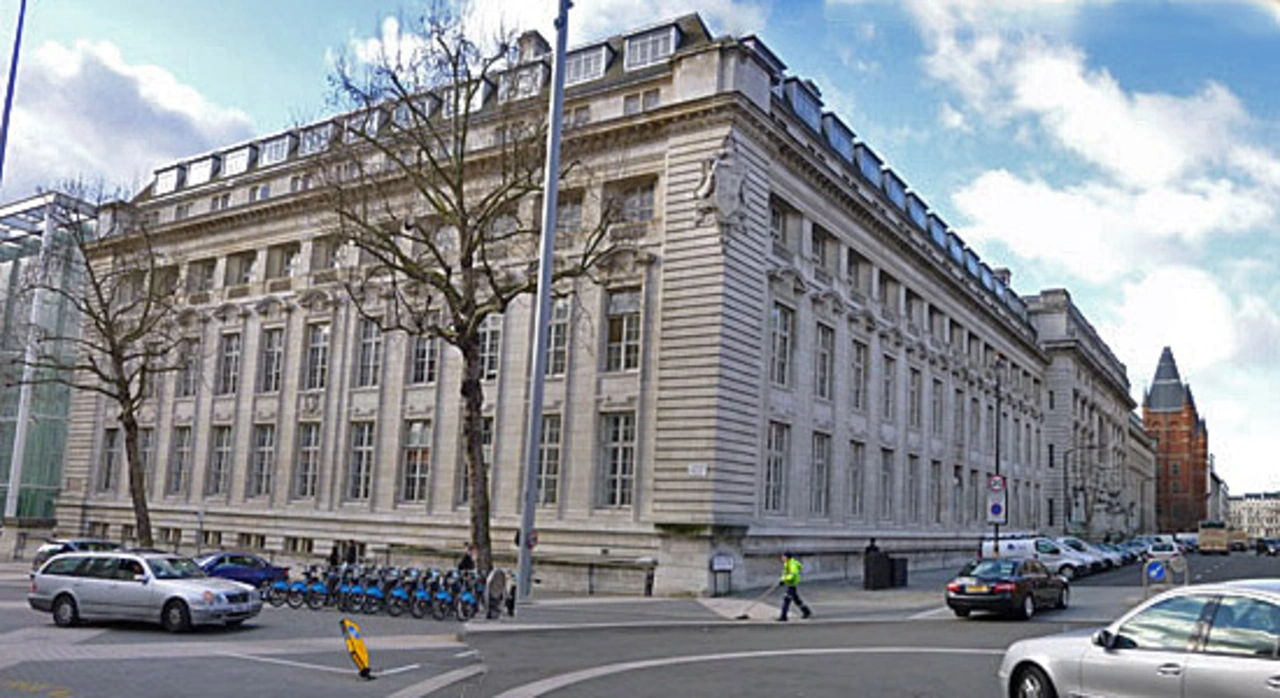
A pivotal change came with the formation of Imperial College London in 1907, when several science and engineering institutions were brought together under one umbrella. The Royal School of Mines became part of this new structure, alongside other schools that trained engineers and scientists for a modernising state.
This integration matters because it is one reason the Royal School of Mines has survived as a recognised identity. Within Imperial, “Mines” became part of a broader culture of specialised engineering education, with strong links between research and teaching. The South Kensington setting also reinforced a distinctive institutional ecosystem: laboratories and lecture theatres near museums and national scientific collections, in a part of London that deliberately presented itself as the capital’s scientific quarter.
For students, the Royal School of Mines became not just a set of courses but a tradition, sustained through cohorts, alumni ties and a recognisable culture within Imperial. In British higher education, such identities can persist long after organisational charts change, and “Mines” is a particularly resilient example.
What is taught under the “Mines” banner now
While the Royal School of Mines has historic roots in mining, the academic content associated with it has broadened and modernised. The modern world still requires mining engineers, but it also requires people who understand the Earth as a system and who can work at the interface of materials, energy, infrastructure and environment.
In practical terms, the fields that sit within this lineage include geology and geophysics, geotechnical engineering, mineral processing and metallurgy’s modern descendants in materials science, and the engineering of subsurface systems. These are not niche concerns. They influence how societies manage risks such as landslides and earthquakes, how they store carbon dioxide underground, how they access geothermal energy, and how they source the materials needed for electrification.
A key point for UK readers is that the transition to a low-carbon economy is not dematerialised. Wind turbines require rare earth elements and steel; electric vehicles require lithium, nickel, cobalt, copper and graphite; power grids require huge volumes of conductive metals. The debate, therefore, is not whether extraction happens, but where, under what standards, and with what accountability. Education linked to the Royal School of Mines increasingly sits inside that reality: training people to work with resources under far tighter environmental and ethical expectations than were common in earlier eras.
The politics of critical minerals and the return of mining to public debate
Mining has returned to the public conversation in Britain in a different form. It is no longer primarily about feeding blast furnaces with coal; it is about securing supply chains for technologies that governments have committed to. The UK, like other countries, is concerned about dependence on a small number of supplier nations for critical minerals. At the same time, domestic mining proposals can generate strong local opposition, shaped by legitimate fears about landscape damage, water pollution and disruption.
This is where the Royal School of Mines becomes relevant beyond academia. It sits at the intersection of policy, industry and environmental concern. Graduates work in sectors that are increasingly scrutinised not only for technical competence but for governance: transparency, community consent, labour standards and long-term remediation.
It is also where old assumptions break down. For decades, many in Britain treated mining as something other countries did, often with lower standards, so that UK consumers could enjoy the benefits without seeing the costs. The energy transition challenges that moral outsourcing. If the UK wants cleaner energy and electrified transport, it must confront the fact that “green” technologies have extractive footprints. Institutions with the heritage of the Royal School of Mines are now operating in a world where their expertise is needed, but their values and partnerships are also questioned.
Research and the modern responsibilities of Earth science and engineering
A modern mining or earth engineering curriculum cannot stop at extraction and processing. It must address waste, water, tailings stability, land restoration, and the social consequences of industrial projects. In the UK and internationally, failures of tailings dams and industrial contamination have pushed these issues into public consciousness, and they have become core professional concerns.
The Royal School of Mines tradition, when at its best, is about the marriage of scientific understanding and engineering responsibility. That includes designing safer operations, improving monitoring, reducing environmental harm and planning for closure from the beginning rather than treating it as an afterthought. It also includes recognising that subsurface engineering can be used for non-extractive purposes, such as carbon storage and geothermal systems, which require similar skills but operate under different social expectations.
For Britain, a country with complex geology and an ageing infrastructure, geotechnical expertise is not optional. Tunnels, railways, reservoirs and urban development all depend on understanding ground conditions. The “Mines” lineage therefore contributes to national resilience in ways that do not always make headlines.
Student culture and the persistence of “Mines” as an identity
Part of the reason people continue to search for the Royal School of Mines is that it functions as a badge. Within Imperial, “Mines” has long been associated with a distinct student culture and community. That culture includes alumni networks and student societies that use the name as a marker of belonging, even as academic departments evolve.
In British universities, such identities can sometimes be dismissed as nostalgia. In technical fields, they often serve a practical function: connecting cohorts across years, linking students to industry, and providing informal mentoring. In a profession where careers can be global and project-based, those networks can matter.
At the same time, there is a modern tension. A “mines” identity can sound anachronistic or politically awkward, particularly to students who care deeply about climate change and social justice. The persistence of the name forces the community to articulate what it stands for now. Is it simply tradition, or is it a commitment to the difficult work of supplying essential materials and managing Earth systems under strict ethical standards? How the Royal School of Mines answers that question will shape its public legitimacy as much as its research output does.
Why the Royal School of Mines still matters in Britain
The most compelling reason the Royal School of Mines remains significant is that the problems it addresses have not gone away; they have changed form.
Britain is moving towards electrification and renewables, but it still depends on materials and on subsurface engineering. It faces flooding, coastal erosion and infrastructure stress, all of which require geoscientific understanding. It debates energy security, including the future of nuclear power and the potential role of carbon capture, both of which lean heavily on geology and engineering.
At the same time, the UK has a complex relationship with its industrial past. Mining is part of that past, and for many communities it is associated with both pride and trauma: employment and solidarity alongside dangerous work and later economic abandonment. Any institution carrying the “mines” name must operate with sensitivity to that history while addressing the modern reality that extraction, in some form, remains part of the human condition.
The Royal School of Mines therefore sits in a charged space. It is a reminder of how Britain built its industrial power. It is also a training ground for the expertise needed to navigate the material demands of the future. Those two roles do not always sit comfortably together, but ignoring either would be intellectually dishonest.
Conclusion
The Royal School of Mines began as a Victorian attempt to professionalise knowledge for an industrial nation. Over time it became intertwined with empire, with the rise of engineering education in London, and with the formation of Imperial College. Its name has survived not because mining is unchanged, but because the underlying questions it addresses remain urgent: how to understand the Earth, how to use its resources, and how to manage the risks that come with both.
For modern Britain, the value of the Royal School of Mines is not confined to nostalgia for steam-age industry. It lies in the expertise that connects geology to infrastructure, materials to energy transition, and technical capability to ethical responsibility. In an era when “green” ambition depends on very ungreen realities of extraction and subsurface engineering, that combination of knowledge and accountability is not an optional extra. It is the work.