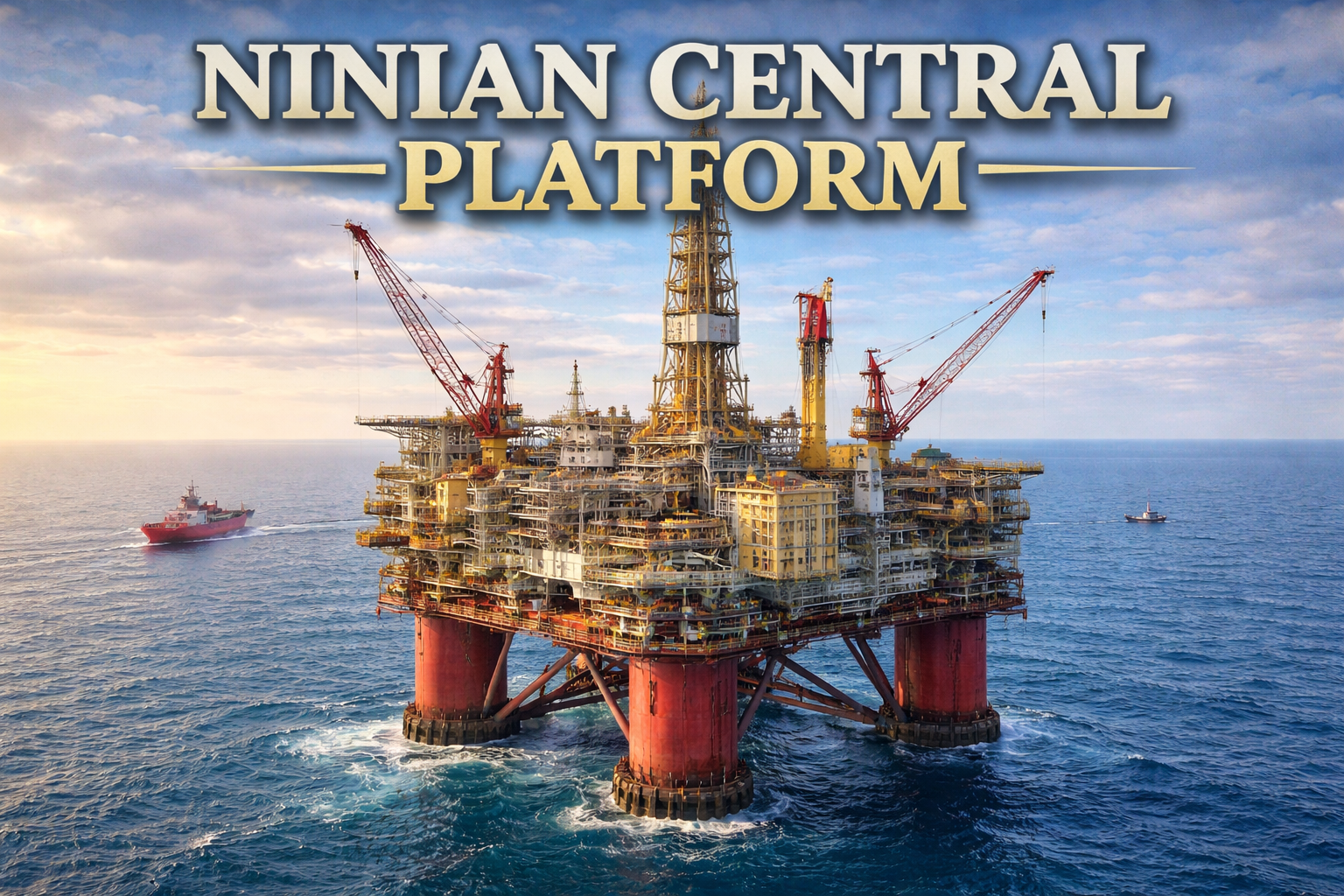
Few industrial structures have shaped modern Britain quite like the offshore platforms of the North Sea. They sit beyond the horizon, out of sight for most of the year, yet they have powered homes, fuelled cars, paid wages, and driven decades of political argument about energy security and climate responsibility. The Ninian Central Platform belongs to that offshore story in a very specific way. It is not as widely known as Piper Alpha, nor as visually iconic as some of the newer floating facilities west of Shetland. But for years the Ninian Central Platform was a major piece of infrastructure in the East Shetland Basin, gathering and processing hydrocarbons in a field that helped define the UK’s late-20th-century oil era.
People searching for ninian central platform are often looking for more than a one-line definition. They want to know where it is, what it did, who worked there, how it fitted into pipelines and export routes, and what happens to a platform when the reservoir beneath it is no longer commercially productive. This is a subject where the language can quickly become technical, so it is worth taking it step by step: the field’s origins, the platform’s basic design, the day-to-day realities of operating offshore, and the increasingly important question of end-of-life decommissioning.
What the Ninian Central Platform is and where it sits
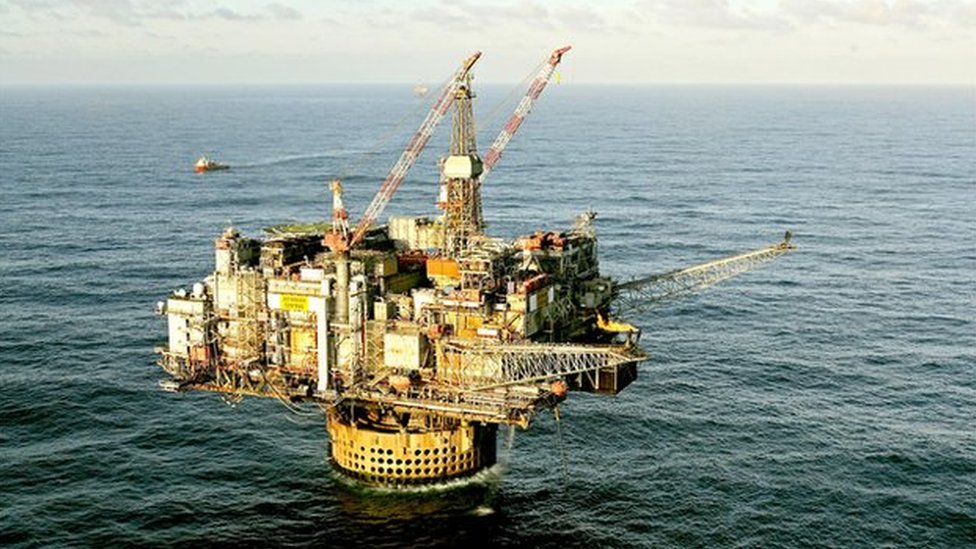
The Ninian Central Platform is a fixed offshore installation in the UK sector of the North Sea, in the East Shetland Basin. In simple terms, it was built to do three things that matter in any mature oil province: bring fluids up from wells, separate and treat them into usable streams (oil, gas and water), and send the hydrocarbons onwards through a pipeline network.
Calling it “central” is not just branding. Offshore field developments are often arranged as a small system of installations rather than one all-purpose structure. A central platform typically provides the main processing capacity and utilities, while satellite platforms or subsea wells feed into it. Over a field’s life, that central processing role becomes even more important because new wells can be drilled to chase remaining pockets of oil, and tie-backs from nearby reservoirs can be added if they make economic sense. The Ninian Central Platform was built in an era when the North Sea was still being mapped and the long-term shape of the province was not yet clear, but it proved adaptable enough to remain relevant as operating strategies evolved.
Geography matters offshore. Distance from shore affects helicopter flight planning, supply-vessel schedules, weather exposure and emergency response. The Ninian area sits far enough north that conditions can be harsh, with winter storms and sea states that influence everything from maintenance work to crew changeovers. That environment is part of what made the Ninian developments technically and logistically demanding, and why platforms like the Ninian Central Platform carried such weight in their time.
From discovery to development: why Ninian mattered
The Ninian field was discovered in the 1970s, during the period when the UK’s offshore industry was rapidly expanding from early finds into large-scale development. The oil shocks of that decade reshaped government thinking about energy supply, and the North Sea became not merely a commercial frontier but a strategic asset. Ninian was among the fields that helped turn the UK into a major oil producer, feeding both domestic consumption and export earnings.
Developing a North Sea field is never simply a case of “find oil, build platform”. Reservoir characteristics, water depth, seabed conditions, and expected production rates all influence the choice of infrastructure. Fixed steel platforms, supported by a jacket structure anchored to the seabed, were the dominant solution for many North Sea developments in that era. They offered robust stability, significant processing space, and the ability to drill multiple wells from a single location, including deviated wells that fan out beneath the seabed.
The Ninian Central Platform was part of a development approach typical of its time: build major installations capable of high throughput and then optimise as you learn more about the reservoir. Later on, as the North Sea matured and the economics tightened, operators became more focused on squeezing value from existing facilities, tying in additional reserves, and managing decline more actively. The Ninian Central Platform’s long working life reflects that shift from early abundance to late-life optimisation.
How a platform like Ninian Central actually works
It is easy to picture an offshore platform as one big machine. In reality it is closer to a small industrial town stacked vertically. The Ninian Central Platform combined heavy processing equipment with power generation, accommodation, safety systems, and the infrastructure needed to keep people alive and productive in a remote environment.
At the heart of any production platform is the separation process. Fluids arriving from wells are a mixture: crude oil, natural gas, and water produced from the reservoir. The platform’s processing trains separate these phases and treat them so they meet pipeline specifications. Oil is stabilised to reduce its vapour pressure and make it safer to transport. Gas may be used for power generation, reinjection, or export depending on the field’s design and the economics of gas handling at the time. Produced water, once treated to remove as much oil as practical, is typically discharged under strict regulatory limits or reinjected.
Above and around those processing systems are supporting utilities. Power generation is essential; platforms cannot rely on shore power in the way an onshore plant might. Heating, ventilation, instrument air, chemical injection systems, and water supplies are all part of keeping the process stable and safe. There is also a constant need to manage corrosion and erosion, particularly in pipework carrying water and sand-laden fluids, because failures offshore can escalate quickly.
Then there are the unmistakable features of the skyline: the flare boom, used to safely burn off gas during upsets or maintenance; the helideck, which sets the rhythm of crew changes; and cranes capable of lifting containers, equipment and, at times, heavy components. The Ninian Central Platform would have carried all the hallmarks of a major North Sea facility: modular processing areas, a control room with continuous monitoring, and living quarters designed for endurance rather than comfort.
The human reality: work, routine and risk offshore
For many UK families, the offshore industry was once a normal part of working life. Rotations—commonly two weeks on, two or three weeks off, though patterns vary—shaped childcare, relationships and health. A platform like the Ninian Central Platform ran around the clock. There is no “closing time” in an industrial process that depends on stable flows and constant monitoring.
Day-to-day work offshore is often less dramatic than outsiders imagine. It is maintenance-heavy: inspections, valve changes, instrumentation calibration, electrical checks, corrosion management, and endless permit-to-work paperwork. The weather has a quiet power over everything. High winds can shut the helideck. Rough seas can delay supply boats. Cold, wet conditions increase fatigue and the chance of error, which is why modern offshore work culture puts such emphasis on stop-work authority and procedural discipline.
The workforce is diverse in function even if it looks uniform in PPE. Production operators, mechanical technicians, electricians, instrument specialists, scaffolders, rope-access teams, catering staff, medics and marine crews all have roles that intersect. On a mature installation, the balance of work often shifts over time: less drilling and construction, more integrity management and life-extension activity. The Ninian Central Platform, operating through decades of changing industry practice, would have seen that transition firsthand.
Safety regulation and the post-Piper Alpha mindset
No serious discussion of a North Sea installation can ignore safety, and in Britain that means acknowledging the watershed of Piper Alpha in 1988. The disaster transformed the regulatory landscape and the culture of offshore operations. While individual platforms differ in design and history, the industry-wide shift was profound: clearer separation of duties, stronger management of change, more rigorous emergency response planning, and the central role of the Safety Case regime overseen by the Health and Safety Executive.
For a facility such as the Ninian Central Platform, safety is not a single system but a layered approach. Engineering controls include fire and gas detection, emergency shutdown valves, blast-resistant structures, and segregated escape routes. Organisational controls include training, competence assessment, permit-to-work systems and robust maintenance planning. Emergency response requires lifeboats, muster procedures, communications, and coordination with coastguard, helicopter operators and onshore control centres.
As installations age, safety management becomes more demanding, not less. Ageing equipment is not automatically unsafe, but it needs more surveillance: more inspections, better data, and sharper decision-making about when to repair, replace or shut down. Late-life platforms also face a particular dilemma: investment must be justified against declining production, yet the safety case cannot be “run down” alongside output. That tension has shaped much of the modern conversation about mature North Sea assets.
The environmental footprint: emissions, discharges and scrutiny
The North Sea is not an abstract space. It is a living marine environment, a fishing ground, and increasingly a contested arena for energy transition projects. The Ninian Central Platform, like other oil and gas installations, carried an environmental footprint that includes routine emissions from power generation, flaring during process upsets, and the management of produced water and chemicals.
Regulation in UK waters has tightened over time, shaped by domestic policy, international conventions and public scrutiny. Operators have been required to monitor and report emissions, manage discharges within strict limits, and adopt best available techniques where practical. Produced water, for example, is not simply “dumped”; it is treated and monitored, with oil-in-water limits designed to minimise harm. That said, even well-regulated discharge is still discharge, and it remains one reason the offshore industry is under pressure to reduce environmental impacts beyond what was considered acceptable in earlier decades.
There is also the climate dimension, which has changed the framing of the entire sector. Platforms emit CO₂ and other greenhouse gases through combustion for power. They also enable the extraction and use of hydrocarbons whose end-use emissions dwarf operational emissions. For UK readers, the question is no longer whether offshore production has an impact, but how to manage that impact while the country still relies on oil and gas for heat, transport, industry and petrochemicals. The Ninian Central Platform sits inside that national tension: a piece of infrastructure that once symbolised energy strength, now part of a complicated debate about transition.
Late-life economics: why mature platforms keep going, until they don’t
Oil fields decline. Pressure drops, water cut increases, and each additional barrel becomes harder to produce. Keeping a platform running in those conditions is an economic, technical and regulatory balancing act. Operators try to extend field life through well workovers, new drilling targets, enhanced oil recovery techniques where feasible, and cost reductions achieved through operational efficiency. Sometimes nearby small accumulations are tied back to an existing platform because building new infrastructure would be uneconomic. A central facility makes those late-life decisions possible.
But decline has its own gravity. As production falls, unit operating costs rise. Maintenance remains essential, but revenue shrinks. At a certain point, continued operation no longer makes financial sense, or the investment required to maintain integrity and compliance becomes disproportionate to expected returns. The UK’s approach to maximising economic recovery, overseen by the North Sea Transition Authority, has attempted to ensure that viable reserves are not left behind prematurely. Yet the end point for any installation is decommissioning.
In the case of the Ninian Central Platform, the broader story is that the UKCS has moved from an era of giant growth to one of managed decline. Assets have often changed hands as fields matured, with larger companies selling to smaller operators specialising in late-life production and cost discipline. That pattern has been common across the basin and has influenced how decommissioning is planned and funded.
Decommissioning: what happens to a platform like Ninian Central
Decommissioning is not a single event. It is a multi-year project involving engineering design, regulatory approval, offshore work campaigns and, crucially, long-term monitoring of what is left behind. The public often imagines a dramatic removal: a platform lifted out in one piece or cut up onshore. In practice, decommissioning is governed by technical feasibility, safety, environmental impact and cost.
A fixed installation such as the Ninian Central Platform typically has a topsides structure and a steel jacket. The topsides can sometimes be removed in large lifts if heavy-lift vessels are available and if the structure is suitable. In other cases it is dismantled in sections. The jacket may be removed fully, cut at or below the seabed, or partially left in place depending on regulatory decisions and engineering constraints. International rules under OSPAR generally require removal, but there are limited circumstances where derogations can be considered, particularly for very large steel structures or where removal poses significant safety or environmental risks.
Wells must be plugged and abandoned to prevent future leaks, a technically demanding operation in itself. Pipelines are flushed and made safe, then either removed or left in place subject to assessment. Subsea equipment is recovered where possible. Onshore, dismantling yards must handle large volumes of steel, contaminated materials, and waste streams that require careful management.
For the UK taxpayer, decommissioning also has a fiscal dimension: because oil and gas production has been taxed, decommissioning relief can reduce the net cost to companies, effectively sharing part of the burden with the public purse. This is politically sensitive, but it reflects the way the UK designed its petroleum tax system over decades. It also creates an incentive to plan decommissioning properly and transparently, because the sums involved can be substantial.
Why the Ninian Central Platform still matters to UK readers
Even if the Ninian Central Platform is no longer operating at peak output, it remains a useful lens for understanding the UK’s offshore present. The North Sea is now an ageing industrial system. Its installations and pipelines are a legacy network that still provides energy and jobs, while also presenting hard questions about emissions, decommissioning capacity, and the ability of Britain’s supply chain to pivot towards new offshore industries such as carbon storage and wind.
There is a tendency in public debate to treat oil and gas as either villain or lifeline, with little space for the practical middle ground where policy actually has to operate. Platforms like Ninian Central sit in that middle ground. They are complex engineering achievements, run by skilled workers in dangerous conditions, governed by a rigorous safety regime, and increasingly constrained by economics and climate policy.
For communities in Scotland and the North East of England, offshore employment has never been an abstraction. It has shaped local economies, from helicopter bases and port services to engineering consultancies and fabrication yards. Decommissioning will extend that industrial footprint into a new phase, creating work that is different in nature but still technically demanding. At the same time, decommissioning marks an end: the gradual withdrawal of infrastructure that once represented future growth.
Conclusion
The Ninian Central Platform was built to do a specific job in a specific sea at a time when the UK’s offshore industry was expanding with confidence. Over the years, it became part of a mature, heavily regulated industrial landscape—one where safety culture, environmental controls and economic discipline steadily tightened. Today, the phrase ninian central platform points not only to a location on a chart but to a broader story about the North Sea’s arc: discovery, development, peak production, decline and the complex, costly work of putting a field safely to bed.
Understanding that story helps make sense of where the UK is now. The country still depends on oil and gas, yet it is committed, at least on paper, to rapid decarbonisation. The infrastructure that bridged those decades is now ageing out. What happens next—how decommissioning is managed, how costs are allocated, and how offshore skills are redeployed—will shape the next chapter of Britain’s relationship with the sea that once promised inexhaustible energy.