Stand on King Edward Bridge Newcastle Quayside on a clear day and you can read the city’s history in a tight sequence of crossings. There is the medieval logic of the old routes, the Victorian confidence of the High Level Bridge, the muscular modernity of the Tyne Bridge and the later additions that keep traffic moving. Yet one of the most consequential structures is also one of the least discussed: a long, curving railway bridge of steel and stone that does its work with minimal fuss, high above the river’s traffic and out of the main tourist frame.
The King Edward Bridge in Newcastle is not the bridge most people name first, but it is arguably the one that changed everyday journeys most decisively. Built in the early years of the twentieth century, it solved a problem that had been quietly limiting the railways of the North East for decades. It gave Newcastle Central Station the direct southern approach it had always lacked, and in doing so it helped shape the city’s role as a national rail hub.
Today, the bridge is an ordinary part of the landscape for commuters and long-distance passengers: a momentary view of the Tyne from a train window before the platforms appear. It is also a reminder of how infrastructure can be both invisible and transformative. To understand king edward bridge newcastle properly you have to look beyond the steelwork and ask why it was built, what it allowed, and what it still carries.
Where the bridge sits, and what it connects
Geographically, the King Edward Bridge in Newcastle spans the River Tyne just west of the High Level Bridge. It links the north bank, where Newcastle Central Station sits, to Gateshead on the south bank, tying into the lines that run towards Durham, Darlington and the East Coast Main Line beyond.
Its position is strategic. Newcastle Central is a through station aligned roughly east–west, yet for much of its early life its most important traffic approached from the south. That meant trains had to cross the Tyne and then find a way into the station from an awkward angle. The High Level Bridge, magnificent as it is, was not designed for the later intensity of rail movements nor for the operational demands of a busy main line station.
The King Edward Bridge provided a new route into Central Station that was better aligned with the way trains actually needed to move. It did not replace the High Level Bridge; it complemented it, taking the strain of mainline services and leaving the older structure to handle other traffic. In the language of modern rail planning, it was a capacity and geometry upgrade decades before those phrases became commonplace.
If you travel into Newcastle from the south today on an intercity service, the chances are you cross the Tyne on this bridge without consciously noticing it. That is its particular success: it makes a complex set of movements feel straightforward.
Why Newcastle needed a second rail crossing
To grasp why the bridge mattered, you have to picture the nineteenth-century railway map as it looked on the ground. The High Level Bridge, opened in the 1840s, was a triumph of engineering and ambition. It carried rail on its upper deck and road below, binding Newcastle and Gateshead together and enabling the railways to extend across the river with authority.
But the High Level Bridge’s alignment and connection into Central Station created a persistent operational constraint. Trains coming from the south could not simply sweep into the station in a direct line. Instead, they often had to perform manoeuvres that cost time and created congestion, particularly as services multiplied and as the railway became the default mode of intercity travel.
Railway operation is a world of small delays that magnify. A train that must stop, change direction, wait for a route, or cross conflicting movements is not just losing minutes; it is consuming capacity in a system where the same tracks must serve many services. By the late nineteenth century, Newcastle’s position on key routes meant these constraints were no longer a tolerable inconvenience. The city was handling long-distance trains, local stopping services, and heavy freight movements tied to coal, industry and ports. Something had to give.
The answer was to build a bridge that approached Central Station from the south in a more natural arc, allowing through movements rather than reversals and reducing the reliance on the older crossing for mainline running. The King Edward Bridge in Newcastle was, essentially, a piece of operational clarity built in steel.
Planning, ambition and the North Eastern Railway
The bridge emerged in the era of the great railway companies, when private operators shaped not just timetables but urban form. The North Eastern Railway, dominant in the region, had both the incentive and the resources to invest in infrastructure that would increase throughput and reliability.
Naming mattered too. When the bridge opened in the early twentieth century it was associated with King Edward VII, and the name has endured. Royal naming did not automatically confer importance, but it did signal a certain confidence: this was a major work, intended to be seen as part of national modernisation rather than as a local fix.
The bridge’s construction also formed part of a broader pattern of upgrades around Newcastle. Central Station itself, originally a product of mid-Victorian railway expansion, had to adapt to changing traffic demands. So did the approaches, junctions and signalling. A bridge is never just a bridge in railway terms; it is the centrepiece of a network of track layouts, gradients and operational rules that determine how well a city can handle the trains that serve it.
In that light, king edward bridge newcastle belongs to a particular moment in Britain’s industrial story: the point where rail travel had matured from novelty to necessity, and where the infrastructure built in the first rush of railway building required more sophisticated additions to keep up.
Engineering the crossing: steel, curvature and capacity
Visually, the King Edward Bridge looks different from the High Level Bridge beside it, and not only because it is newer. It is longer, more sweeping, and its line is curved rather than straight. That curve is not decorative; it is the engineering response to a practical problem, shaped by the need to connect existing track alignments on both banks and to feed trains into Central Station efficiently.
The structure is typically described as a steel arch and girder bridge supported on substantial masonry piers. From the riverbanks, you can see the rhythm of spans and the way the steelwork sits above the stone supports, a characteristic blend of late-Victorian and Edwardian engineering: robust, legible, unapologetically functional. The bridge was built to carry heavy loads and to do so repeatedly, day after day, through weather that is rarely gentle in the North East.
It also carries multiple tracks, reflecting its role as a main artery rather than a minor route. The presence of several tracks matters because it allows different services to run with fewer conflicts. A two-track crossing can quickly become a bottleneck when you have fast and slow trains sharing the same path. A wider bridge gives planners the option to segregate movements, maintain higher frequencies and recover more easily from disruption.
Construction of a bridge across a working river and in a built-up area is never simple. It requires careful staging, foundations that can handle both weight and water, and the kind of logistical coordination that railway companies of the time had learned through bitter experience. Much of the public drama has faded—there were no social media feeds, no time-lapse videos—but the achievement remains: a major structure inserted into a dense corridor of transport and industry, with long-term reliability as the overriding goal.
The relationship with the High Level Bridge: not rivalry, but a division of labour
Because the two bridges sit so close together, people sometimes treat them as competitors: the Victorian masterpiece versus the Edwardian workhorse. In reality, their relationship has always been about distribution of traffic.
The High Level Bridge was built at a time when the railways were still consolidating routes and when Newcastle’s main station arrangements were different. It did its job brilliantly, but it was never designed for the specific operational pattern that later dominated: high volumes of through services running north–south via Central Station.
The King Edward Bridge in Newcastle allowed the network to separate functions. Mainline services could use the newer crossing that was designed to feed directly into Central’s track layout, while the High Level Bridge could continue to serve other trains and, crucially, provide redundancy. In railway terms, redundancy is not a luxury; it is a form of resilience. When one route is blocked for maintenance or incident response, having another crossing close by can make the difference between a manageable disruption and a city-wide standstill.
This division of labour also illustrates a broader truth about British railway infrastructure. Many of the best-known structures were not replaced when they became constrained; they were supplemented. The network evolved by accretion, adding new pieces to solve new problems while older pieces continued in adapted roles. King edward bridge newcastle is a textbook example of that approach.
How the bridge changed journeys into Newcastle Central

It is hard to convey, in a world accustomed to seamless timetables, what a direct approach line can do for a station. Newcastle Central is a major node, handling long-distance trains from London and Edinburgh, regional services across the North East, and local trains serving communities on both sides of the Tyne. Its efficiency depends on trains being able to arrive and depart without excessive shunting or conflicting movements.
Before the King Edward Bridge, a train approaching from the south faced a more awkward sequence. With the new bridge, the approach became cleaner. The result was not simply faster running times, but a smoother use of platforms and tracks. Over a day, those marginal gains add up to real capacity.
This mattered in the early twentieth century, when rail was at its peak as a national transport system and when Newcastle was a key industrial and commercial city. It mattered later too, as the railway adapted to the motor age, survived rationalisation, and then experienced renewed strategic importance through electrification and modern service patterns.
A bridge can be judged by how often people talk about it. By that measure, the King Edward Bridge is underappreciated. It can also be judged by how easily it disappears into routine. By that standard, it has been a success for more than a century.
Wartime, modernisation and the durability of a working bridge
Any major piece of railway infrastructure in Britain carries a twentieth-century history of stress. Wars, economic shifts, changing technology and deferred maintenance all leave marks, even when the marks are not visible to casual observers.
During wartime, railways were strategic assets and targets. Newcastle, with its industry and its transport links, was exposed to the risks that followed. Bridges were points of vulnerability. They were also points of extraordinary effort, kept functioning under pressure because the movement of goods and people depended on them.
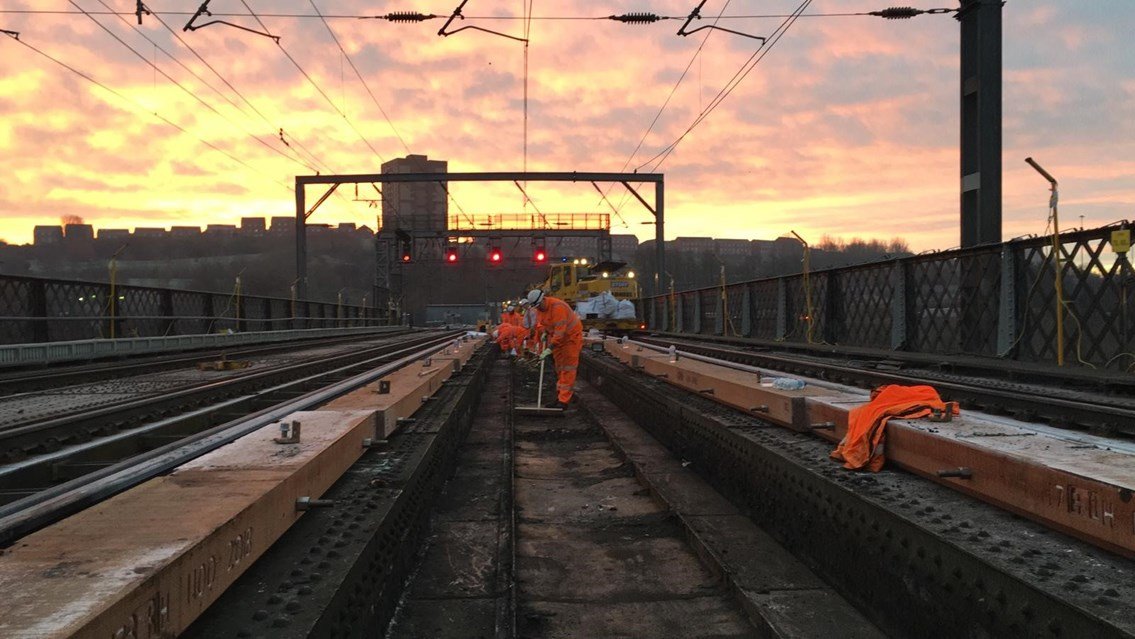
Post-war, the railways entered a period of modernisation and then contraction, and later renewed investment. Through all of that, the King Edward Bridge in Newcastle remained central to the city’s rail geography. The arrival of overhead line electrification on main routes brought new equipment and new constraints, including the need to accommodate wires and associated structures without compromising the bridge’s integrity. Maintenance regimes evolved. Steelwork requires persistent attention: painting, inspection, and repair to manage corrosion and fatigue. Track renewals and signalling upgrades have their own cycles.
What tends to be overlooked is that keeping a bridge like this in service is not passive. It is an ongoing engineering project, conducted in short night-time windows, in carefully planned possessions, under the pressure of keeping trains running. The bridge’s continued use is as much a story of maintenance as it is of original design.
Seeing the bridge in the city: viewpoints and urban presence
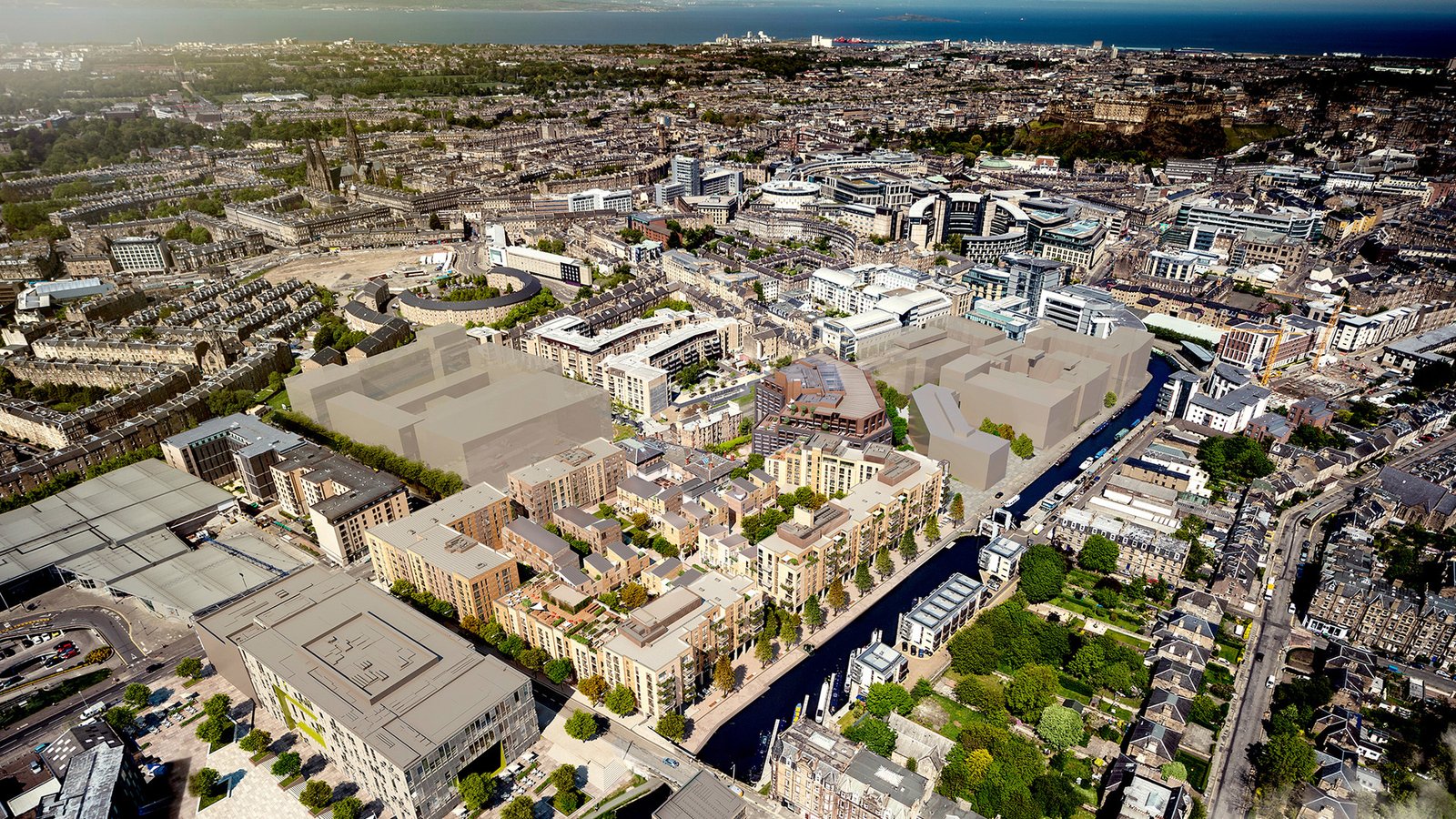
Because it is a railway bridge, people often experience it only from a train, as a brief sweep of river and quayside. But it is also part of Newcastle’s wider townscape, and it can be understood more fully from the riverbanks.
From the Quayside and from points near the Swing Bridge, you can see the sequence of crossings and how each one reflects a different era. The High Level Bridge, with its stacked decks and monumental piers, speaks of early railway confidence. The King Edward Bridge, with its steel arches and functional line, speaks of a system maturing and solving its own problems. Further downstream, later bridges express the growth of motor traffic and the modern city’s need for road capacity.
The King Edward Bridge’s curve is particularly striking when viewed from below. It gives the structure a sense of motion even when it is static, and it reveals how the bridge was designed to fit the railways’ needs rather than the river’s symmetry. In that curve you can read a practical urban truth: infrastructure is often shaped less by what looks elegant on a map and more by what connects efficiently to what already exists.
The bridge also has an aesthetic value that is not always acknowledged. There is a restrained beauty to big engineering done well: the repetition of structural elements, the honest expression of forces, the way the bridge sits in relation to the river and the banks. Newcastle is fortunate in having a collection of crossings that make that story visible.
The bridge’s role today: mainline artery and quiet essential
In the present day, king edward bridge newcastle remains a crucial rail link. It carries long-distance services on the East Coast route, regional trains, and other traffic that needs to cross the Tyne into Central Station efficiently. If the bridge were out of service for an extended period, the effects would ripple far beyond the city, because Newcastle is not an endpoint; it is a hinge between Scotland and England, between coastal and inland routes, between local networks and national timetables.
Its role also illustrates the realities of rail planning in Britain. Major new railway bridges are rare. The existing network is expected to carry modern demand through upgrades rather than wholesale rebuilding. That makes structures like the King Edward Bridge even more important: they are not easily replaced, and they must be kept fit for purpose through careful management.
There is also a broader resilience argument. Climate pressures, heavier rainfall, and the increasing demand for reliable public transport place higher expectations on fixed infrastructure. The bridge’s robust form and its history of adaptation suggest why it has endured, but endurance is not automatic. It depends on investment, monitoring and the willingness to take inconvenient engineering possessions so the long-term asset remains sound.
Conclusion
The King Edward Bridge in Newcastle is a piece of infrastructure that rarely demands attention, which is precisely why it deserves some. It was built to solve a practical problem—how to bring trains into Newcastle Central from the south efficiently—and in doing so it reshaped the city’s relationship with the railway. It reduced operational complexity, increased capacity, and allowed the older High Level Bridge to continue in a different role rather than becoming a single point of strain.
More than a century on, king edward bridge newcastle still carries the weight of that decision, in steelwork that has outlasted the companies that commissioned it and the eras that justified it. It is an engineering solution that became part of the city’s everyday fabric, and one of the reasons Newcastle remains, in railway terms, what it has long been: a place where routes meet, cross and continue.