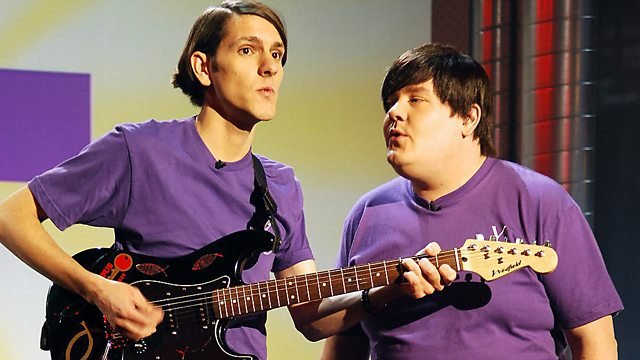
There are programmes that shape a generation’s sense of humour, and there are programmes that, for all their profile, become a kind of negative reference point: the show people mention when they want to talk about how difficult comedy is, how unforgiving television can be, and how quickly goodwill evaporates when the jokes don’t land. The horne and corden sketch show sits uncomfortably in that second category.
That is not because it was obscure. On the contrary, it arrived with the sort of built-in visibility most sketch comedies can only dream of. Mathew Horne and James Corden were, by the late 2000s, intimately familiar faces in Britain: young, successful, and attached to a sitcom that had become a cultural marker. In that climate, a sketch show bearing their names was almost inevitable, the kind of commission that looks sensible on paper. Two popular performers, a recognisable double act, a youth-leaning channel, and a format with a long pedigree in British television.
Yet the horne and corden sketch show ran briefly and is now remembered more for the speed with which it curdled than for any enduring comic invention. To understand why, it helps to treat it not as an isolated misfire, but as a case study in how British comedy commissioning works, how sketch formats reward and punish particular instincts, and how the public’s expectations can be shaped by success elsewhere. It also asks a more awkward question, one that applies far beyond this one title: what happens when celebrity becomes mistaken for a substitute for a point of view?
The moment that made it possible
British television has always had space for sketch comedy, but it rarely gives sketch performers the kind of immediate mainstream attention that sitcom stars can accumulate. Sitcoms build affection over time. They create familiarity and, crucially, narrative investment. Viewers don’t simply like the jokes; they like the people. That warmth is transferable, at least in theory. If the audience has already accepted you into their homes, they may follow you into a different format.
The horne and corden sketch show was born in precisely that logic. Horne and Corden were coming off the back of a widely watched, warmly regarded sitcom success, and the industry reflex in such moments is to “capture” the audience again quickly while the cultural temperature is high. The title itself tells you what the channel was selling: not a concept, not a theme, but the performers as the brand.
BBC Three, where the series was broadcast, was at the time attempting to define itself as the BBC’s younger, risk-friendlier sibling. It wanted comedy that felt contemporary, that could be clipped and talked about, and that might develop into bigger franchises. A short-run sketch series fronted by two very current faces suited that brief.
But television momentum can be deceptive. A performer can be genuinely talented and still not be the right engine for a particular format. A channel can be correctly chasing younger audiences and still misread what those audiences will tolerate. And a show can be “well-timed” in commissioning terms while being badly timed in cultural terms.
Sketch comedy, especially, is a harsh environment in which to test those assumptions.
Sketch comedy’s peculiar difficulty
The public often treats sketch comedy as lighter work than sitcom. There are no long character arcs to manage, no story engines to keep plausible, no need for emotional continuity. In reality, sketch is frequently harder. It is more exposed.
A sitcom can carry a slightly weak joke on the strength of character and situation. A sketch cannot. A sketch arrives, establishes itself, and must make its point quickly. If it fails, there is nowhere to hide. Viewers are not invested in the character’s future; they are judging the present moment. The rhythm is unforgiving.
In Britain, the most celebrated modern sketch shows tend to share a few features. They either arrive with a strongly defined comic worldview or they build one rapidly. The Fast Show refined brevity and repetition into a language. That Mitchell and Webb Look leaned into intelligence and structural play, often twisting the logic of a scene rather than simply presenting an odd person. Little Britain, for all the debate it now attracts, had a clear sense of broadness and catchphrase-driven escalation that was tightly engineered for mass recognition.
These programmes also had something less glamorous: a robust mechanism for quality control. Sketch shows live and die by editing, by the ability to discard good-but-not-great material, and by the willingness to rewrite ruthlessly. They are often the product of heavy writing-room labour, testing, revision, and an awareness of what the audience has already seen elsewhere.
The horne and corden sketch show entered a crowded post-2000s comedy landscape. Viewers were already steeped in the grammar of the form. They had seen high-concept sketches, mock documentaries, character grotesques, deadpan absurdism, and celebrity parody. The question any new sketch show has to answer is simple and brutal: what are you bringing that is yours?
What the horne and corden sketch show appeared to aim for
It is easy, with hindsight, to reduce the series to a punchline. A fairer approach is to examine what it seemed to be trying to do.
The horne and corden sketch show positioned itself as mainstream sketch entertainment with a youthful sheen: a mix of character pieces, topical riffs, and performances that relied on Horne and Corden’s ability to play heightened types. The tone was broad rather than experimental, with an emphasis on recognisable social situations and exaggerated personalities. In a sense, it was pursuing the traditional British sketch promise: quick turns, big choices, and a parade of mini-worlds.
The problem with that approach is that it requires either exceptional writing precision or a particularly distinctive comic sensibility. Broad sketch works when the exaggeration is sharpened by observation. Without that edge, it risks becoming noise: loud performances in search of a comic idea.
A further challenge lay in the show’s framing. When a sketch series carries the performers’ names in the title, it raises the implicit claim that the audience is coming for them above all else, that their comic identity is in itself an organising principle. That can work for performers whose public persona is already rooted in sketch, or whose double-act dynamic is so defined that it generates material almost automatically.
Horne and Corden, however, were best known at that point for a different kind of work: character-driven sitcom, anchored in relationships and longer scenes. Transplanting that appeal into quick-fire sketches is not impossible, but it demands careful translation. Sketch asks you to build a character in seconds, not seasons. It asks you to reveal the joke immediately, not after a slow accumulation of familiarity.
The series also arrived in a media moment when audiences were starting to consume comedy in fragments online, but still judged television by the standards of a full half-hour experience. That split matters. A sketch show can survive if it produces a handful of brilliant scenes that travel. It struggles if it produces a lot of competent-but-not-essential material that feels like padding between the better bits. In the late 2000s, viewers were becoming less patient with filler, and increasingly ready to declare, loudly and publicly, that something was a waste of time.
Audience expectations: the weight of previous success
The biggest trap for the horne and corden sketch show was the one that made it attractive to commissioners: familiarity.
People did not come to it as a blank slate. They arrived with expectations shaped by Horne and Corden’s previous work and by the wider comedy ecosystem. They expected the charm and warmth associated with their sitcom roles, and they expected the punch and invention associated with the sketch format. Those expectations can pull in opposite directions.
Warmth is not always sketch comedy’s friend. Sketch often thrives on cruelty, surprise, embarrassment, transgression, or at least sharp social discomfort. Even relatively gentle sketch shows tend to contain a vein of bite. A performer associated with geniality may find themselves forced either to push against their established image or to deliver broad material without the protective coating of narrative sympathy.
At the same time, the public is quick to punish anything that looks like overreach. When two popular performers front a show that appears to trade on their fame, viewers become sensitive to the question of entitlement. Are they doing something because they have something to say, or because the industry has given them a vehicle?
That suspicion is not always fair, but it is real. It is intensified when the work itself does not justify the attention.
Why the jokes didn’t stick: a question of comic architecture
When sketch comedy fails, it is rarely because the performers are incapable of being funny. It is more often because the material lacks architecture.
A strong sketch has a clear internal logic. It establishes a premise, escalates it, and ends before the audience grows tired of the pattern. It can be character-based, but the character must be doing something structurally interesting. It can be absurd, but the absurdity must be disciplined. It can be crude, but crudity alone is not a joke; it is merely a flavour.
One critique commonly levelled at the horne and corden sketch show was that it leaned too often on obviousness: the sense that the viewer could see the punchline arriving long before the sketch finished. That is a particular sin in sketch, because the form depends on speed and surprise. If the audience is ahead of you, the rest becomes endurance.
Another issue was tonal consistency. The best sketch shows feel as though they have been edited by someone with a ruthless sense of pace. Even when sketches vary wildly, the half-hour has a shape. When that shape is missing, the experience can feel like a string of ideas rather than a coherent comic statement.
There is also the question of cultural timing. The late 2000s were an awkward transitional era in British comedy. Traditional studio formats were still common, but the sensibility of audiences was shifting. The rise of online comedy and the growing visibility of American comedic styles influenced what people expected in terms of rhythm, self-awareness, and sharpness. A sketch show that felt even slightly dated in its mechanisms risked being judged as stale on arrival.
It did not help that the show’s very existence invited comparison with giants. British television has a long memory. The moment you do sketch, you are placed in a lineage. That lineage can be inspiring, but it is also a high bar.
Critical reception and the speed of the backlash
British critics can be brutal about comedy, partly because comedy is so hard to defend with generalities. A drama can be praised for ambition even if it is flawed. Comedy tends to be judged by a simpler metric: did it make you laugh?
When the horne and corden sketch show met a hostile response, that hostility had a particular intensity because it collided with the perception of hype. People resent being told they are going to enjoy something. If a show arrives with a sense of inevitability, some viewers will watch looking for reasons to resist it. If it then disappoints, the disappointment becomes a kind of entertainment in itself. Mockery fills the gap where laughter should have been.
The series also existed at the threshold of a more participatory culture of criticism. Social media was not yet the all-consuming feedback engine it would become, but it was already shaping how quickly a reputation could form. A few widely shared opinions could establish a narrative that became difficult to shift. Comedy, once declared “unfunny” in a public forum, struggles to recover, because the label changes the way people watch. They start counting failures rather than noticing successes.
In later years, James Corden himself has spoken candidly about the show’s shortcomings, a rare instance of a high-profile performer acknowledging a professional misstep without defensiveness. That acknowledgement matters, not as gossip, but as an indication that the people involved understood what the audience was reacting to.
The careers afterwards: what survived the misfire
One of the more revealing aspects of the horne and corden sketch show is that it did not derail its stars. That might sound surprising given how strongly the programme is remembered as a failure, but it speaks to a basic truth about television careers: audiences are capable of compartmentalising.
Corden, in particular, moved into other formats where his strengths were better suited. He worked in theatre, took on a variety of acting roles, and eventually became associated with a different kind of entertainment altogether, built on hosting and personality-driven performance. Whatever one thinks of his later work, it is clear that he found arenas in which timing, warmth, and quick rapport mattered more than sketch precision.
Horne continued acting across television projects, including comedy and drama, building a career that was not reliant on being one half of a double act. That, too, is significant. Double acts can be commercially useful, but they can also become confining if the public begins to see the partnership as the only context in which either performer makes sense.
In that light, the horne and corden sketch show looks less like a defining statement and more like a transitional experiment that went wrong. The failure was public, but it was not fatal. What it did do was add a cautionary chapter to the story of how fame is leveraged in British television.
The commissioning lesson: star vehicles versus comic point of view
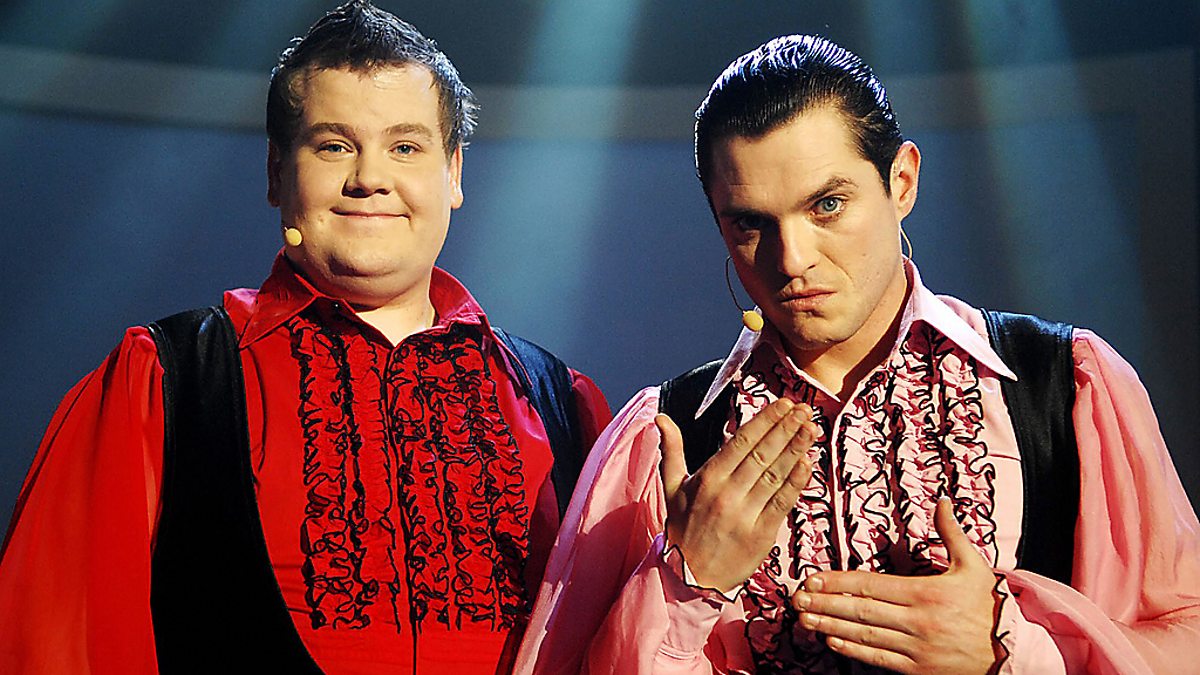
British broadcasters have long been tempted by the star vehicle. It is a rational temptation. Commissioning is risky, comedy especially so, and a recognisable name seems to reduce uncertainty. If a performer has already drawn a large audience, surely that audience will return.
But comedy is not transferable in a simple way. A performer who is funny in a sitcom might not be funny in sketch. A writer who excels in long-form character development might struggle to produce short, sharp premises. A channel’s existing audience might want the familiar comfort of a known face, yet still demand innovation from the format.
In the case of the horne and corden sketch show, the commission seemed to be driven by the belief that popularity could act as scaffolding for a difficult genre. The trouble is that sketch comedy is one of the few television forms where scaffolding is easily spotted. If the audience feels the show exists primarily because the performers are famous, the material has to work twice as hard to prove its necessity.
There is also the matter of editorial courage. Strong sketch shows often contain oddness: recurring characters that initially confuse, structural experiments that initially jar, sketches that don’t resolve in traditional punchlines. They find their audience partly by refusing to chase approval too directly.
A star-led sketch show can be pulled in the opposite direction, towards broadness and immediate recognisability, precisely because it is expected to deliver quickly. That pressure can flatten the risk-taking that sketch needs to feel alive.
BBC Three and the cultural context of the late 2000s
BBC Three’s identity at the time matters in understanding the show’s reception. The channel was trying to be youthful, but it was still within the BBC’s wider ecosystem and its expectations of mass appeal. Its comedy output often occupied a middle ground: edgier than BBC One, but not so niche that it could ignore mainstream judgement.
This produced a peculiar kind of scrutiny. A BBC Three comedy could be dismissed by older viewers as “not for them” while still being judged by the standards of the classic BBC comedy canon. Meanwhile younger viewers, increasingly attuned to internet-driven comedic sensibilities, could be impatient with anything that felt like an older model repackaged.
The horne and corden sketch show ended up caught between those audiences. It was too high-profile to be treated as a small experiment, yet too light on innovation to be treated as a genuine reinvention of the form.
It is also worth noting that the late 2000s were a period of anxiety about British comedy’s direction. Some of the biggest sketch successes of the earlier decade were already being reassessed, and new tastes were emerging. In that kind of atmosphere, a show that looked like a throwback could become a lightning rod for wider frustration: not just “this isn’t funny”, but “this is what the industry thinks comedy still is”.
Reappraisal in the clip era: why the show still gets searched
If the horne and corden sketch show is so widely considered a misstep, why does it still attract attention?
Partly because failure is instructive. People search for it now not simply to relive an old programme, but to understand a moment in British popular culture: the period when Horne and Corden were at their most visible in the UK, when BBC Three was in a particular phase of its life, and when sketch comedy was fighting to justify itself against changing audience habits.
The internet has also changed how we remember television. A short sketch can circulate without the dead weight of the surrounding half-hour. Something that felt thin in broadcast form can, when isolated, appear better—or at least more tolerable. Conversely, the ease of access can harden reputations, because a show’s weakest moments can be clipped and shared repeatedly, becoming the definitive representation.
There is, too, a strand of cultural nostalgia at work. The late 2000s now sit far enough back to be treated as a distinct era: pre-streaming dominance, pre-total social media saturation, when linear schedules still mattered more. People revisit the comedy of that period as a way of revisiting their own lives, their own media diets, and the shift from one kind of television culture to another.
In that sense, searches for the horne and corden sketch show are not always about the laughs. They are about the context.
What it tells us about British humour, cruelty, and the limits of “nice”
British comedy has long oscillated between the cosy and the brutal. There is a tradition of warmth and silliness, and there is an equally strong tradition of embarrassment, satire, and discomfort. Sketch comedy, especially in its modern form, often leans towards the latter, because discomfort is efficient. It creates tension quickly. It can deliver a jolt in under a minute.
Performers associated with geniality face a particular dilemma here. If they stay “nice”, the sketches can feel toothless. If they go sharp, the audience may recoil because it contradicts their established image. Navigating that requires either a very clear comic identity or an exceptionally strong set of writers who can shape the material around the performers’ strengths.
The horne and corden sketch show, judged by its reception, did not manage that navigation. The result was a series that, for many viewers, seemed neither pleasantly gentle nor satisfyingly biting. It occupied an awkward middle, where the exaggeration did not feel anchored in either affection or critique.
That is a subtle failure, and perhaps the most interesting kind. It is not that the show was simply “bad” in an abstract sense; it is that it struggled to decide what kind of laughter it was asking for.
The enduring point: sketch comedy punishes complacency
It is tempting to end with a neat moral, but the better conclusion is simply the most practical one. Sketch comedy punishes complacency more quickly than almost any other television format. It rewards precision, revision, surprise, and a sense of purpose. It can elevate performers into national institutions, but it can just as easily expose the gap between public affection and comic craft.
The horne and corden sketch show is remembered because it demonstrates that gap in a particularly visible way. It arrived with the advantages of fame and expectation, yet those advantages became part of the problem, intensifying scrutiny and narrowing the space for the show to find itself. Its legacy is less about any single sketch than about the broader lesson it offers to broadcasters and performers alike: if you are going to do sketch, you need more than familiar faces. You need an idea of what you are, what you are for, and why the audience should give you their time in a form that gives you so little room to recover when a joke fails.