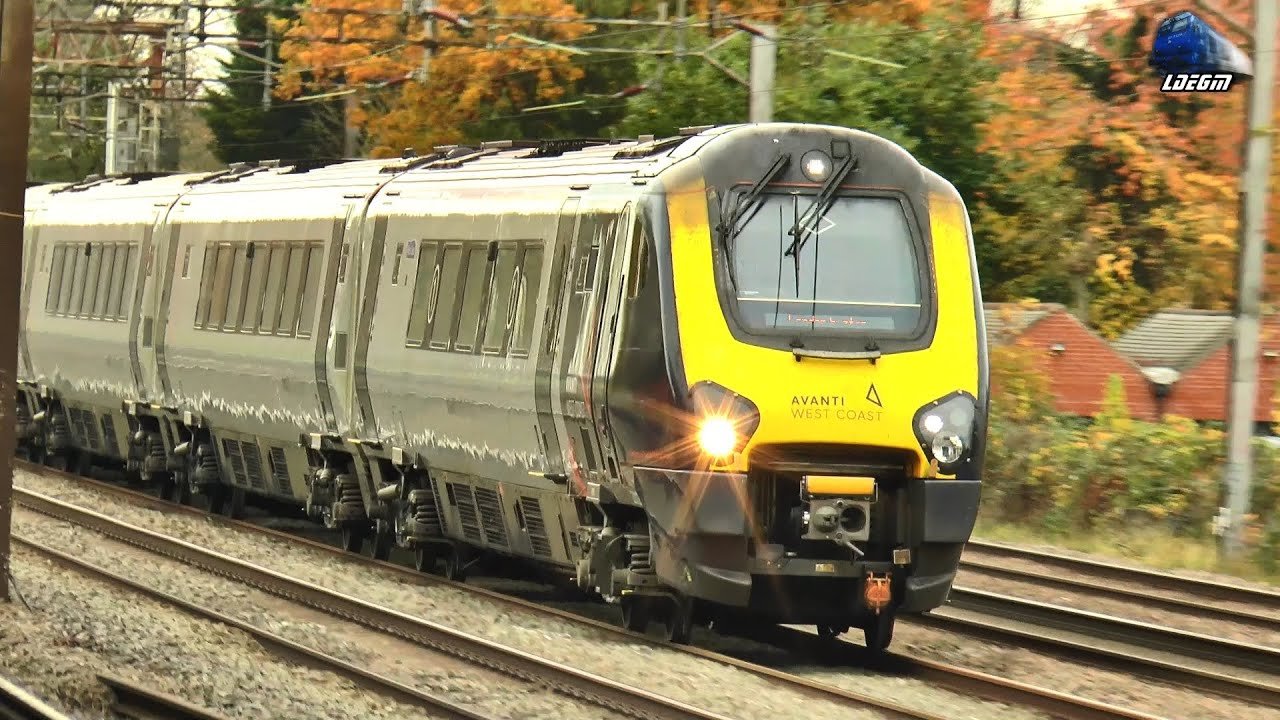
For a generation of rail passengers, the Class 221 Super Voyager is the sound of long-distance travel in modern Britain: the steady thrum of underfloor engines, the faint whine as it gathers speed, and—on the right stretch of line—the subtle lean into a curve that arrives like a reminder that this is not a conventional train. It is also, depending on whom you ask, a symbol of progress or a compromise too far: a fast, flexible workhorse that brought airline-style frequencies to the railway, or a cramped, noisy machine that never quite matched the ambition of the routes it served.
Two decades after the first sets entered service, the Class 221 remains central to inter-city travel on several key corridors, particularly where electrification is incomplete and where the railway must stitch together cities and regions without the benefit of continuous overhead wires. Its story is tied to the early-2000s remaking of the UK rail network, the rise and fall of branding-driven franchising, and the hard engineering truth that Britain’s busiest main lines were built with curves, gradients and Victorian geography that modern operators still have to respect.
To understand the Class 221 Super Voyager properly, you need to look at what it was designed to do, the constraints it was built around, and the way it has been asked—year after year—to carry more people, more luggage and more expectations than anyone admitted on launch day.
From the Voyager family to the “Super” label
The Class 221 Super Voyager belongs to Bombardier’s Voyager family, a group of diesel-electric multiple units built at Derby in the early 2000s. The family resemblance is obvious: sleek ends, a relatively narrow body profile suited to Britain’s loading gauge, and a modular, distributed-power layout rather than a traditional locomotive at one end.
The “Super Voyager” name is not a formal engineering designation so much as a piece of railway marketing that stuck. Virgin CrossCountry introduced the brand to distinguish the tilting Class 221 from the non-tilting Class 220 Voyagers that ran alongside them. In a period when train operators were trying to sell the idea of a step-change in comfort and speed, “Super” suggested a premium leap. In practice, the leap was specific: tilt, 125 mph running capability, and the promise of faster journeys over curvaceous main lines.
The timing mattered. The sets arrived into a network still digesting privatisation and the upheavals that followed the Hatfield crash, when speed restrictions and infrastructure caution put punctuality and capacity under strain. Operators wanted trains that could accelerate quickly, run fast where the infrastructure allowed, and be deployed flexibly across long routes without the need to shunt locomotives or change traction. The Class 221 was meant to be a modern answer to those demands.
Engineering in plain terms: how the Class 221 is put together
What makes the Class 221 Super Voyager technically distinctive is not one dramatic innovation but a package of choices: distributed traction, high-speed capability, and a tilting mechanism designed to shave minutes off schedules on winding routes.
Each coach carries its own diesel engine under the floor. That engine drives a generator, producing electricity for the traction motors and onboard systems. It is a configuration that brings strong acceleration and redundancy: if one engine has problems, the unit may still be able to limp to a depot rather than failing completely. It also spreads weight along the train, which can help adhesion and reduce the axle-load concentration associated with locomotive-hauled sets.
The trade-off is obvious to anyone who has travelled in one. Underfloor engines mean noise and vibration are closer to the passenger saloon than on locomotive-hauled trains, and the space under the floor that might otherwise be used for equipment, tanks and structural freedom is heavily occupied.
The units were built in both four-car and five-car formations. That flexibility helped operators match capacity to demand and made it easier to diagram trains across complex networks. It also created a recurring criticism: that long-distance inter-city routes were being served by trains that could be too short at busy times, especially once passenger numbers grew beyond early-2000s forecasts.
On performance, the Class 221 was specified for 125 mph operation, aligning it with the fastest conventional services on Britain’s main lines. The extent to which that capability can be used depends on routes, signalling, line speeds and the presence of tilt authorisation. A train can be engineered for high speed; it still has to live inside the limits of the track.
Tilt: what it does, why it exists, and why it is controversial
Tilting trains are often misunderstood as a gimmick. In reality, tilt is a practical attempt to reconcile two stubborn facts: many main lines have tight curves because they were built through existing settlements and difficult terrain, and building new straight high-speed lines is politically and financially arduous.
When a train takes a curve at speed, passengers feel lateral forces pushing them outward. Traditional lines require slower speeds through such curves to keep those forces within comfort and safety limits. Tilting trains lean into the curve, reducing the lateral sensation experienced in the saloon. That allows higher speeds through curves without making the ride intolerable.
The Class 221 Super Voyager’s tilt system was designed primarily with the West Coast Main Line in mind, where curviness is significant in places and where higher speeds were a commercial necessity. Tilt does not transform a Victorian railway into a modern high-speed line, but it can save minutes consistently across a route, and in a timetable world those minutes matter. A few minutes gained can mean a path exists where it otherwise wouldn’t, or a connection becomes reliable rather than risky.
Yet tilt is also a system with maintenance overhead and operational complexity. It requires route clearance, driver training, and close integration with the train’s control systems. There have been periods where tilt has been restricted or disabled due to infrastructure work, maintenance regimes, or technical issues. When tilt is unavailable, the Class 221 continues as a fast diesel unit, but its headline differentiator fades—and passengers may not notice the difference other than a slightly altered ride feel and, occasionally, a longer journey time.
Some passengers dislike tilt outright, reporting motion discomfort. Others barely register it. The broader controversy is less about motion sickness and more about what tilt represented: an attempt to extract more performance from ageing infrastructure rather than building something new.
Where the Class 221 has run, and why it ended up there
The Class 221 Super Voyager was introduced for long-distance services where electrification was patchy and route patterns were complex. In the Virgin era, it became closely associated with services on the West Coast Main Line, including routes that benefited from tilt.
Over time, as franchises changed and rolling stock was reassigned, the Class 221’s footprint shifted. Today the type is most commonly associated with Avanti West Coast and CrossCountry, though precise allocations and diagrams can change with refurbishments, cascades and the slow churn of fleet strategy.
CrossCountry’s network is, by its nature, a proving ground for diesel inter-city units. Its services link the South West, the Midlands, the North East and Scotland, traversing a patchwork of electrified and non-electrified sections and mixing high-speed main line running with slower approaches into major stations. For that job, a fast diesel multiple unit remains essential. The Class 221 fits the bill, even if it was never designed around the passenger volumes CrossCountry now often faces.
For Avanti West Coast, the class has historically provided flexibility for certain services and as cover alongside electric fleets. Even with the expansion of electric operations, there remain reasons why a diesel unit can be useful: diversions, engineering work, and routes where electrification does not reach. The UK rail network is notorious for disruption that forces operators to improvise; versatile rolling stock is not a luxury.
Passenger experience: comfort, noise, and the reality of long trips
Ask regular travellers about the Class 221 Super Voyager and the response tends to be nuanced, sometimes grudgingly so. The train is quick, it can keep to demanding diagrams, and it has introduced a level of service frequency that older rolling stock could not always sustain. But comfort is where opinion fractures.
The underfloor-engine layout creates a distinctive acoustic environment. In some seats, particularly above or near an engine module, the noise can be persistent, and conversation requires a slightly raised voice. Vibration is not constant, but it can be noticeable, especially at certain speeds. For short hops, it is tolerable. For a three-hour run, it becomes part of the experience in a way passengers cannot ignore.
Then there is the question of space. The Class 221’s body profile reflects Britain’s restrictive loading gauge, and the internal layout reflects early-2000s assumptions about luggage and travel patterns. Since then, travel has changed. More passengers carry wheeled suitcases, more people combine business travel with weekend stays, and air travel habits have fed into the expectation that a passenger should be able to bring a sizeable bag and keep it nearby.
The Voyager family has long been criticised for limited luggage space relative to demand on busy routes. Vestibules can become clogged with bags, which creates friction for boarding, affects accessibility, and heightens the sense of crowding. Operators have adjusted policies and undertaken refurbishments, but the underlying geometry is difficult to escape without rethinking interiors wholesale.
Seating comfort is another recurring topic. Some passengers find the seats adequate, others do not, and much depends on refurbishment cycles, upholstery condition and seat pitch. A train can be delivered with a particular comfort standard; two decades of use, alterations, and varying maintenance standards can make that standard uneven across the fleet.
To be fair, the Class 221 was not designed as a luxury product. It was designed as a high-utilisation inter-city unit, spending much of its life in service rather than in depots. That design philosophy shows.
Accessibility and boarding: the practicalities that define a journey
Accessibility on any train is about more than the presence of a disabled toilet or a wheelchair bay. It is about the whole journey: boarding, moving through the saloon, storing mobility aids, and accessing assistance without delay.
The Class 221’s layout includes accessible spaces, but it also has the typical constraints of its generation: relatively narrow vestibules, doorways that can become obstructed by luggage, and interiors shaped by the need to fit equipment and seating into a limited cross-section.
At busy times, the congestion created by standing passengers and bags can be the biggest barrier. Even a well-designed accessible area becomes harder to reach when the gangway is clogged. This is not unique to the Class 221, but the combination of high demand and limited storage amplifies it.
Boarding is generally straightforward at stations with level access and adequate staff support. Where platforms are curved, crowded or short-staffed, the experience can deteriorate quickly. The train is not solely responsible for that; the broader station environment matters. But passengers often judge a fleet by what happens on the worst day, not the best.
Reliability, maintenance and the price of high utilisation
Rolling stock reputations are shaped as much by fleet management as by design. The Class 221 Super Voyager was built for intensive use, and it has been worked hard. In the years since introduction, the trains have faced the typical lifecycle challenges: component wear, obsolescence of certain systems, the need for mid-life refurbishment, and the constant pressure to keep units available for service.
Diesel multiple units, particularly those with an engine per car, demand a disciplined maintenance regime. The benefits of distributed power come with complexity: more engines to service, more auxiliary systems, more potential points of failure. Modern diagnostics help, but they do not eliminate the basic arithmetic of upkeep.
There have been periods where Voyager availability has been a public issue, especially when coupled with network disruption and staffing problems. It is important, though, not to collapse every delay into a rolling stock failure. The UK rail system is an ecosystem. A fleet can be reliable on paper yet still deliver a poor passenger experience if infrastructure, timetabling and operational resilience are strained.
That said, the Class 221 has sometimes been criticised for being a “high-maintenance” design, particularly when compared with simpler rolling stock. Tilt adds another layer. A tilting mechanism is not a passive feature; it is a system that must be inspected, calibrated and kept within tight tolerances.
Refurbishment and evolution: how the interior has changed over time
The phrase “Class 221 Super Voyager” can mislead passengers into imagining a fixed experience. In reality, interiors evolve. Seats are replaced or re-trimmed, lighting changes, passenger information systems are updated, Wi‑Fi and power sockets appear or improve, and toilets are upgraded. Different operators also specify different finishes and layouts.
Refurbishment is not only cosmetic. It can involve significant technical work: updating fire safety compliance, renewing HVAC components, improving door systems, upgrading accessibility features, and reworking vestibule areas to manage crowding. Some changes are driven by regulation, others by passenger expectations, and some by the hard fact that parts and suppliers disappear over time.
Yet refurbishment has limits. A train’s fundamental constraints—car length, door spacing, body width—remain. You can re-trim a seat, but you cannot conjure a wider aisle without removing capacity. You can improve luggage racks, but you cannot redesign the entire underfloor space that houses engines and equipment.
This is why opinions about the Class 221 can be so polarised. Passengers judge what they see and feel: cleanliness, seat comfort, crowding, noise. Engineers and operators see something else: a fleet that has absorbed years of heavy work while delivering high speed on diesel traction, which is not trivial in British conditions.
Comparing the Class 221 with its siblings and successors

To understand the Class 221, it helps to compare it with the Class 220 Voyager. The two are close relatives, and to the casual passenger they can seem almost identical. The key difference is tilt: the Class 221 was built with it, the Class 220 was not. Operationally, that can matter on certain routes, but on many diagrams the passenger experience is shaped more by crowding and refurbishment condition than by tilt capability.
Then there are newer bi-mode and electric trains that have increasingly taken over long-distance work elsewhere. Bi-modes offer the promise of electric performance where wires exist and diesel reach where they do not. That sounds like an obvious upgrade, and in many cases it is. But bi-modes are heavier and complex in their own right, and they are not a universal solution. Fleet replacement is also constrained by capital budgets, manufacturing capacity, depot capability and the political cycle that governs transport funding.
The Class 221 occupies a middle ground: modern enough to run at 125 mph and to support contemporary onboard systems, old enough to reflect design assumptions from a different era of passenger demand.
There is also the question of the Class 222 Meridian, another Bombardier design sometimes mentioned in the same breath. The Meridian family shares certain design principles but was oriented towards different operators and route requirements. Comparisons can be instructive, but they also risk missing the key point: every fleet is a compromise between cost, speed, capacity, and the reality of the infrastructure it must run on.
Diesel in a decarbonising age: the uncomfortable strategic question
Any serious assessment of the Class 221 Super Voyager now has to confront the climate and air-quality debate. Diesel traction on inter-city routes is increasingly out of step with policy ambitions to decarbonise transport. Even passengers who are not particularly ideological can sense the direction of travel: more electrification, more electric fleets, fewer diesel trains running under wires.
The UK’s electrification strategy has been inconsistent for decades, marked by bursts of activity and long pauses. That inconsistency is part of why trains like the Class 221 remain vital. If you do not electrify the network comprehensively, you either run diesel, run bi-mode, or accept broken journeys with forced changes of train.
At the same time, running diesel trains on partially electrified routes is a visible inefficiency. It also creates a public relations problem for the railway, which often positions itself as the greener alternative to road and air. In crowded corridors, diesel exhaust at stations can be more than an abstract concern.
This does not mean the Class 221 is uniquely culpable. It is a product of the choices made about infrastructure investment over decades. But it does mean the fleet sits in a strategic squeeze: needed for service delivery, increasingly awkward in the policy landscape.
Capacity, crowding and why the Super Voyager attracts criticism
If there is one complaint that returns more reliably than any mechanical defect, it is crowding. The most biting criticism of the Class 221 is not that it fails to run, but that when it does run it is too full.
This is partly a demand story. Passenger numbers on many long-distance routes grew significantly after the early 2000s, and they did so in ways that were hard to predict precisely. It is also a rolling stock strategy story. Shorter formations can be efficient when demand is moderate, but they become a liability when services are busy and when the timetable cannot easily accommodate longer trains.
The Class 221’s four- and five-car formations were not inherently irrational. They allowed frequent services and operational flexibility, and they suited the platform lengths and depot arrangements available. The problem is what happens when those formations become the backbone of routes that behave like commuter corridors at peak times. A train designed as an inter-city unit ends up doing inter-city and commuter work simultaneously, and both sets of passengers feel underserved.
Crowding changes everything. It makes luggage problems worse. It makes accessibility harder. It turns a tolerable noise level into an irritant because you cannot move away from the engine bay. It also increases dwell times at stations as passengers struggle to board and alight, which can erode punctuality. In other words, capacity is not only a comfort issue; it is an operational one.
The Class 221 as a cultural object: branding, expectation and the railway’s image
The “Super Voyager” branding is a reminder of an era when train operators leaned heavily on names, liveries and onboard theatre to convey modernity. Virgin, in particular, treated trains as part of a broader customer experience narrative. The Class 221 inherited that narrative, whether it deserved it or not.
Over time, branding fades and passengers judge a train by function. A unit that was once marketed as an upgrade becomes simply “the train”, subject to ordinary standards: is it clean, is it on time, can I sit down, can I charge my phone, can I put my bag somewhere, can I work, can I rest?
There is a deeper point here about how expectations are created. If you call something “Super”, you invite scrutiny. When passengers find cramped vestibules or standing-room-only conditions, the disappointment is sharper because the promise implied comfort. That mismatch between name and experience has shaped public commentary on the Class 221 more than many technical debates.
In fairness, the railway as a whole has struggled with expectation management. In a network under pressure, even a good train can feel like a bad one if the service is overcrowded and the ticket is expensive.
What the future likely holds for the Class 221 Super Voyager
Predicting rolling stock futures in Britain is hazardous because decisions depend on electrification programmes, procurement cycles, franchise or concession structures, and political priorities that can change abruptly. But some trends are clearer than others.
The Class 221 Super Voyager is unlikely to disappear overnight. Its core virtues—high speed on diesel traction, flexibility, and established maintenance infrastructure—make it difficult to replace quickly without a well-funded, well-planned alternative. New trains take years to specify, build and introduce, and depots take time to adapt.
At the same time, the fleet is ageing. As units move further past the twenty-year mark, obsolescence management becomes harder. Parts supply becomes more fragile, and the cost-benefit calculation of deep overhaul versus replacement shifts.
The strongest pressure point is environmental policy combined with the operational logic of electrification. If more routes are wired consistently, diesel inter-city units become harder to justify on core corridors. They may be displaced to secondary duties, used for diversions, or retained where electrification remains politically difficult. If electrification continues to proceed in fits and starts, the Class 221 may be asked to carry on doing what it has always done: filling the gap between ambition and infrastructure.
One likely scenario is a continued pattern of refurbishment and incremental improvement. Operators can and do improve passenger information, seating, connectivity and accessibility within the limits of the design. That does not solve capacity constraints, but it can make the lived experience less abrasive.
Conclusion: a train built for compromise, still carrying the network’s contradictions
The Class 221 Super Voyager is not an icon in the romantic sense. It is too practical, too busy, and too often judged through the lens of crowding and fatigue. Yet it has done something significant: it made fast, frequent, long-distance diesel travel normal on routes where the railway could not rely on electrification, and it did so with enough performance to compete in a transport market that does not tolerate sluggishness.
Its flaws are real and easy to describe: noise, vibration, luggage space, and formations that can feel inadequate on today’s passenger volumes. Its virtues are equally real, though less fashionable to acknowledge: speed, flexibility, and an ability to work hard across varied geography with minimal fuss when the system around it is under strain.
In the end, the Class 221 Super Voyager is best understood not as a failed promise or a triumph, but as a product of the Britain that built it. A country with an old railway, an inconsistent infrastructure strategy, rising demand, and a habit of asking rolling stock to solve problems that properly belong to long-term planning. The train has carried those contradictions for years, and it is still doing so every day it leaves a platform with its engines humming beneath the floor.