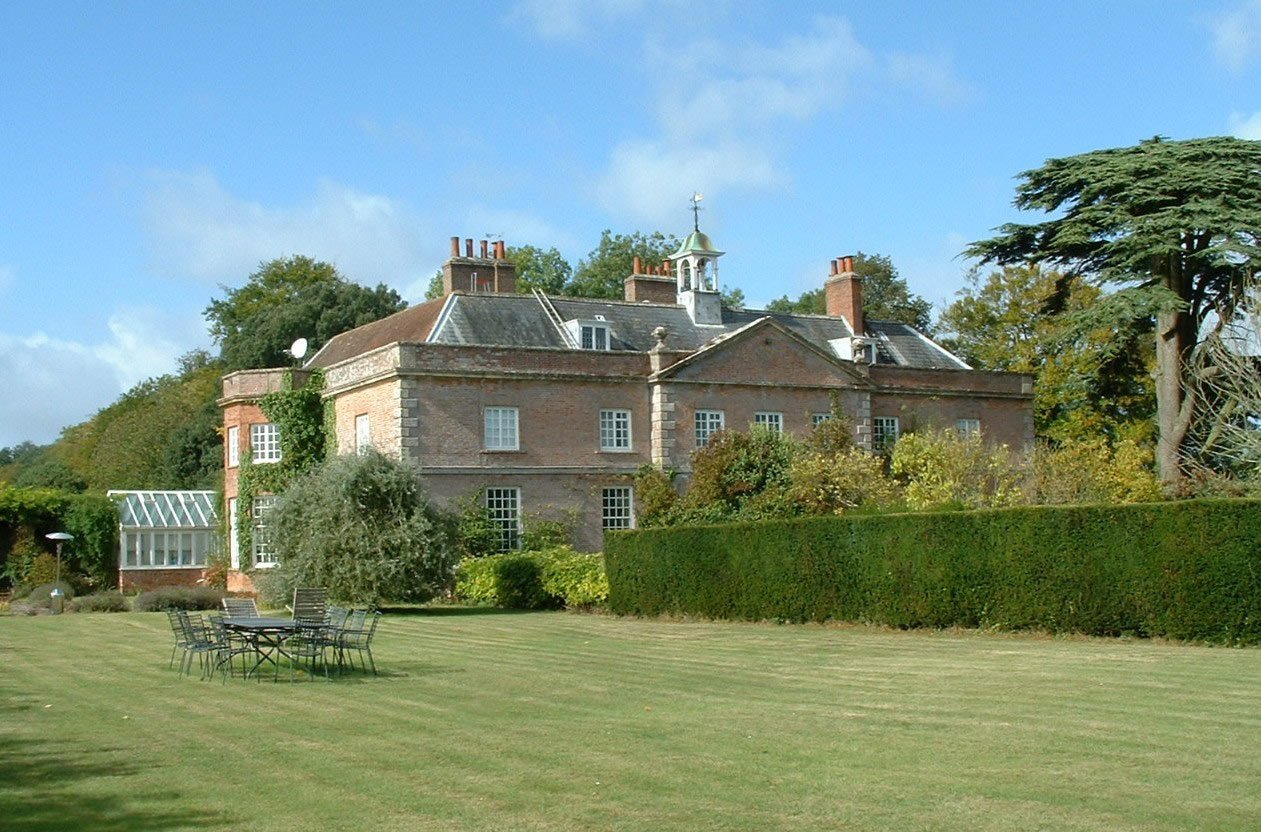
A visitor standing on the quiet lanes above the Somerset Levels might struggle to believe that a substantial country house once anchored this patch of farmland and woodland. There is no grand façade to photograph, no sweep of gravel to crunch underfoot, no line of stables humming with activity. Yet Burton Pynsent House remains one of those English buildings that refuses to disappear entirely, because its story is lodged in the contours of the land, in a monumental folly on a hilltop, and in a political bequest that linked a rural parish to the highest office in the country.
For many people searching for Burton Pynsent House, the first surprise is that the house itself is largely gone. The second is that its absence is part of the point. Country houses are often discussed as survivors: carefully conserved, adapted, opened, repurposed. Burton Pynsent House belongs to a different tradition, the one in which a seat could be built, altered, celebrated and then quietly dismantled, leaving behind a ghost of a designed landscape and a paper trail that historians must stitch together.
This is an account of what Burton Pynsent House was, why it mattered, what happened to it, and what can still be read in the setting today.
The place: Burton Pynsent and its commanding hill
Burton Pynsent is a small parish in South Somerset, within a landscape that feels open, worked and old. It sits in the orbit of Langport, Martock and the villages that cluster on slightly higher ground above the wetter lowlands. The area is defined by gentle ridges and long views, with pockets of woodland and the kind of hedged fields that make the countryside look settled rather than wild.
The crucial geographical feature is the prominent hill that rises above the surrounding land. In Somerset, where so much of the terrain is modestly rolling, a hill that offers a clear vista becomes a natural stage. It is there, visible from miles around, that the Pynsent Monument stands. The monument is not a random eccentricity. It is directly connected to the estate and to Burton Pynsent House, a statement in stone that tells you the people who owned this ground wanted to be seen and remembered.
In the eighteenth century, when designed landscapes were about orchestrating views as much as planting trees, this combination of hill and panorama was a gift. It allowed an owner to organise an estate visually, creating a sense that house, park and surrounding countryside were part of one coherent scene.
What exactly was Burton Pynsent House?
When people refer to Burton Pynsent House, they are usually talking about a country seat associated with the Pynsent family and later with William Pitt the Elder. It was the principal residence on the Burton Pynsent estate, a house that played its part in the social and political geography of Georgian England even though it never became a headline destination like Stourhead or Blenheim.
The difficulty for modern readers is that the house did not survive in the way many great estates did. Parts were altered over time, ownership changed, and eventually the building was demolished. That means the phrase “Burton Pynsent House” can encompass more than one phase: an earlier manor on the site, later Georgian remodelling, and the house as it was known in the era when the landscape was being reshaped.
It is also easy to confuse the estate with what remains. Today, the most conspicuous surviving feature connected to the story is the Pynsent Monument, a towering triangular obelisk-like structure that dominates the skyline. But the monument was never the house. It was an adjunct: commemorative, symbolic, and also part of a wider landscape composition.
To understand Burton Pynsent House properly, it helps to treat it as an estate complex rather than a single building. The house sat within a managed environment of parkland, farmland, woods, routes and designed views, all of which were intended to express status and taste.
The Pynsent family and the roots of an estate
The name “Pynsent” in Somerset is not decorative. Families of this sort built their power over generations through landholding, local office, marriage alliances and the slow accumulation of influence. By the time Burton Pynsent House became associated with national political figures, it already rested on a local base of authority.
In the seventeenth and eighteenth centuries, Somerset’s gentry and minor aristocracy operated in a world where the county mattered: assizes, parish administration, patronage, and the management of estates that were both economic engines and social theatres. A house like Burton Pynsent House would have been a centre for that activity, a place where tenants came with problems, neighbours came to dine, and networks were maintained.
What makes Burton Pynsent distinct is that the estate’s story becomes entangled with the politics of the mid-eighteenth century, not because the family produced a Prime Minister, but because the estate became a vehicle for honouring one.
The bequest to William Pitt the Elder: politics carved into property
The most famous link in the history of Burton Pynsent House is William Pitt the Elder, later Earl of Chatham. Pitt was one of the defining political figures of his age: a wartime leader and statesman associated with Britain’s global ambitions in the Seven Years’ War, admired and attacked in equal measure.
The story goes that Sir William Pynsent, a supporter of Pitt, left the Burton Pynsent estate to him in his will. This was not a routine inheritance. It was a political gesture, an act of allegiance that translated admiration into land. The details of such a bequest mattered because they broadcast values: loyalty, shared outlook, and a desire to bind a public figure to a particular place.
It is tempting to treat this as a kind of celebrity footnote, but it is more revealing than that. Eighteenth-century Britain did not separate politics and property neatly. Land was power; landed status carried authority; and estates could be used to signal alignment and legacy. By accepting Burton Pynsent, Pitt became attached to a Somerset parish in a way that was both tangible and symbolic.
For Burton Pynsent House, this connection is central. Even if Pitt did not live there in the way a long-established family might have done, his involvement shaped the estate’s most enduring feature: the monument.
The Pynsent Monument: a landmark of memory and message
If Burton Pynsent House has a visible afterlife, it is through the Pynsent Monument. Built on the hill above the estate, the monument reads as both personal commemoration and public statement. Its form is severe and geometric, the sort of structure that belongs to a tradition of eighteenth-century follies that were less about whimsy and more about theatre.
Monuments of this kind served multiple purposes. They were eye-catchers, deliberately sited to dominate a view. They were conversation pieces, giving visitors something to talk about and a reason to walk the grounds. They also anchored a narrative: they told a story about the owner’s taste, loyalties and sense of history.
In this case, the monument is understood as being raised by Pitt in honour of Sir William Pynsent. It marks gratitude and commemoration, but it also does something else. It links Pitt’s national significance to the local landscape. From certain angles, the monument reads like a signature on the horizon, asserting that this place mattered enough to merit a structure of unusual scale.
The monument’s survival also affects how Burton Pynsent House is remembered. Many demolished country houses slip into obscurity because nothing remains to spark curiosity. Here, the monument keeps the question alive. People see it from a road or footpath and ask what it is, and that leads them back to the lost house.
Georgian taste and the reshaping of the landscape
To talk about Burton Pynsent House without talking about landscape design is to miss much of what would have impressed visitors in the eighteenth century. A house of this type was not judged solely by its rooms and elevation. It was judged by how it sat in its park, how the approach unfolded, where the eye was drawn, and how the owner appeared to have tamed nature into art.
The period in which Pitt was involved coincided with a revolution in English landscape taste. Formal avenues and rigid geometry gave way to sweeping lawns, clumps of trees, serpentine water and carefully framed views. “Natural” became the watchword, though the naturalness was painstakingly engineered.
The name most often associated with such transformations is Lancelot “Capability” Brown, whose influence on the English landscape is hard to overstate. Burton Pynsent is widely connected with Brown’s work, and the estate’s topography would have suited his methods: the use of rising ground for drama, and the creation of long views that made an estate seem larger and more coherent than it really was.
Even when a house is gone, a Brown landscape can sometimes be read in the land itself. The placement of tree belts, the line of a drive, the sudden opening of a vista, the way a clump sits on a slope: these are the sorts of details that can survive ploughing and replanting, especially where boundary lines and woodland have remained relatively stable.
For Burton Pynsent House, the designed landscape is part of its meaning. The estate was not simply a building; it was a composition.
Inside Burton Pynsent House: what can be said with confidence
Because Burton Pynsent House has not survived, any description of its interior must be handled carefully. It is easy to drift into generic country-house imagery and present it as fact. A more responsible approach is to stick to what can be inferred from the type of house it was, the period in which it was prominent, and the documentary evidence that survives in maps, estate records and contemporary references.
A house serving as a gentry seat in Somerset, particularly one associated with a notable political figure, would have been expected to contain a suite of reception rooms for entertaining and display. It would have had service quarters, storage, and the accommodation required to run a household with servants. If it was remodelled or modernised in the Georgian period, it may well have adopted the classical language typical of the time: symmetry, sash windows, and restrained ornament rather than the crowded grandeur of earlier styles.
What is equally important is that such houses were working entities. They were administrative centres for an estate that produced rent and agricultural output. Burton Pynsent House would have been tied to farms, tenancies and rural labour. The business of the estate and the life of the family were interwoven in ways modern visitors, accustomed to seeing country houses as heritage attractions, sometimes forget.
The house’s social role would also have been local. Even when a nationally prominent figure was involved, the everyday reality of Burton Pynsent House would have revolved around Somerset society: visits, dinners, parish connections, and the rhythms of the agricultural year.
Ownership after Pitt: how estates change hands and change meaning
One reason the story of Burton Pynsent House becomes difficult to follow is that estates seldom remain static. They change hands through inheritance, marriage, debt, sale and reorganisation. A house’s fortunes rise and fall according to the priorities and finances of its owners.
In the nineteenth century, many country houses were altered to suit Victorian tastes and practicalities. Service areas were expanded or reorganised, new wings were added, and gardens were reworked. Some houses prospered; others were maintained at the bare minimum. The economic base of the landed world began to shift, and the old certainties of rent and deference were gradually eroded by agricultural depression, changing politics and the long-term pressures of upkeep.
For a house like Burton Pynsent House, which did not have the scale and wealth of the very greatest estates, these pressures could be decisive. Maintenance costs could outstrip income. Families might prefer to invest elsewhere. A house might be leased, neglected, partially demolished, or allowed to drift into obsolescence.
This is not a uniquely Somerset story. Across England, the twentieth century was catastrophic for many country houses. Death duties, wartime requisitioning, labour shortages, and changing social norms combined to make large houses difficult to sustain. Demolition was common, sometimes presented as a rational economic decision, sometimes as a cultural tragedy, often both.
The demolition of Burton Pynsent House: absence as evidence
At some point in the twentieth century, Burton Pynsent House was demolished. That single fact reshapes everything about how we understand it. When a building survives, historians can read its fabric: alterations, materials, the sequencing of construction, the evidence of changing fashion and necessity. When it is gone, the historian must work backwards from traces.
Demolition does not always mean total erasure. Elements can survive as outbuildings, walls, gate piers or garden structures. Sometimes a stable block or a walled garden remains in private use. Sometimes the footprint can be detected as a flattening in a field, a change in vegetation, a stubborn line on a map.
What is striking about Burton Pynsent House is how thoroughly it has slipped from view compared with the monument. The hilltop structure is dramatic and public-facing; the house site is quieter and less accessible, and much of what would have framed the building has been absorbed back into agricultural use. That imbalance shapes memory: the monument becomes the story, and the house becomes a question.
Yet the fact of demolition is itself part of twentieth-century social history. It speaks to the decline of the country house as a dominant institution, and to the choices made about what was worth saving. In many places, churches, monuments and landscapes survived where houses did not, because they were easier to maintain, more symbolically “public”, or simply less costly to keep standing.
What remains today: reading the estate in the present landscape
For anyone trying to connect with Burton Pynsent House now, the experience is partly about accepting that the estate must be read through what remains rather than what once stood. The Pynsent Monument is the most obvious starting point because it is visible, extant and historically specific.
The landscape itself also retains meaning. Even when land use changes, certain patterns persist. Ancient boundaries have a habit of surviving in hedgelines. Parkland trees can outlive the houses they were planted to adorn. The line of an approach road can survive as a track, even if the destination has vanished. Woodland that was once planted as a belt may still hold its shape.
There is also the question of place-names and local memory. In rural England, names often carry forward the existence of buildings long gone: “Park”, “Lodge”, “Manor”, “Home Farm”. Burton Pynsent’s own name is a reminder that the family and estate were once central enough to define the locality.
To walk the area with a map is to see how an estate can be both present and absent. You may not find a house, but you can find alignments, routes and viewpoints that were chosen, not accidental. The hilltop monument, in particular, makes sense only when seen as part of an estate composition.
Why Burton Pynsent House matters beyond local curiosity
It is fair to ask why a demolished house in a small Somerset parish deserves such attention. The answer lies in the way Burton Pynsent House acts as a case study for several strands of British history.
First, it is a story about politics and land. The bequest to Pitt ties a local estate to national power in an unusually explicit way. It shows how personal loyalty and public life could be translated into property, and how estates could be used to write political messages into the countryside.
Second, it is a story about the designed landscape. The eighteenth century’s transformation of rural estates shaped the English countryside in ways that are still visible, and Burton Pynsent is part of that wider movement. The survival of the monument, and the probable imprint of landscape design, makes it a useful example of how taste and power were expressed outside the city.
Third, it is a story about loss. The disappearance of Burton Pynsent House is not merely an architectural footnote. It belongs to a national pattern of country-house demolition that altered the cultural map of Britain. Every demolished house is also a record of changed economics, changed society, and changed assumptions about what should be preserved.
Finally, Burton Pynsent House matters because it asks us to think about heritage in a less comfortable way. Heritage is often presented as a collection of surviving treasures. But much of the past survives only as fragments: a monument without its house, a landscape without its centre, a story without a building. Learning to read those fragments is part of understanding England as it actually is, not as a brochure might prefer it.
How historians reconstruct a lost house
When a house is gone, reconstruction depends on a mixture of sources, each with limitations. Old maps can show the footprint, the approach drives, the arrangement of buildings and the extent of parkland. Estate papers, where they survive, can reveal repairs, building campaigns, staff and accounts. Contemporary descriptions, if any exist, may hint at the appearance and reputation of the house. Later photographs, even distant or incidental ones, can be invaluable if they capture the skyline or a façade.
The challenge is that evidence is often uneven. A grander house is more likely to have been painted, engraved or described. A house that was important locally but not nationally famous may leave a thinner trail. That does not make it insignificant; it simply makes the historian’s work more delicate.
In the case of Burton Pynsent House, the monument has helped keep the estate in view, meaning the place appears in discussions of Pitt, of eighteenth-century commemorative architecture, and of Somerset landscapes. That broader interest increases the chances that documents were noticed, cited, or preserved.
But there is still a gap between what can be proved and what can be plausibly inferred. A responsible account will acknowledge that gap rather than fill it with decorative certainty.
Visiting the site in the twenty-first century: access and expectations
People often look up Burton Pynsent House because they want to visit. The important thing is to understand what a visit can and cannot offer.
The Pynsent Monument is the most accessible and rewarding focus. It can be reached via public rights of way, and it offers the views that explain why the hill mattered. From the top, you begin to understand the estate as a theatre of sightlines. You can see how a monument could serve as an anchor point, a fixed symbol visible from the surrounding countryside.
The house site, by contrast, is not a conventional visitor attraction. Much of the land around historic estates is privately owned and farmed. That is not an obstacle to history; it is part of the living countryside. But it does mean visitors should keep to rights of way, respect working land, and avoid assuming that “heritage” equates to open access.
The right expectation is not to find Burton Pynsent House standing, but to encounter a landscape with layers. The monument is the headline. The quieter story is in the terrain: the way the hill commands the setting, the way the estate would have sat within a larger agricultural economy, and the way time has edited the scene.
Burton Pynsent House in the wider story of Somerset
Somerset is rich in historic houses, from well-known showpieces to places that survive as farms, fragments, or names on maps. What Burton Pynsent House adds to that county-wide picture is a particular combination of themes.
There is the interplay between a relatively modest parish and a figure of national stature. There is the eighteenth-century taste for landscape as an expression of power and sensibility. There is the monument as a surviving artefact that changes how the whole place is perceived. And there is the twentieth-century pattern of demolition, which affected Somerset as it did the rest of England.
Taken together, these themes make Burton Pynsent House more than a lost building. It becomes a way of reading the county’s history: the rise of landed influence, the confidence of Georgian design, and the later retreat of the great house as an institution.
Conclusion
Burton Pynsent House is no longer a house you can enter, admire, or even easily see. Its significance lies in what the estate still communicates: a landscape shaped by ambition and taste, a monument that fixes a political and personal story into the skyline, and a reminder that much of England’s architectural past has been dismantled rather than preserved.
To understand Burton Pynsent House is to accept that history is often unevenly visible. A hilltop structure can endure when a mansion does not. A designed view can outlast the drawing room that once framed it. In Burton Pynsent, that imbalance is not a disappointment so much as a clue. It tells you where people invested their meaning, what later generations chose to keep, and how a small Somerset parish came to hold a fragment of the nation’s political memory.