Newmarket has a habit of confounding first-time visitors. On the surface it can seem like an ordinary Suffolk town stretched along a main road, with shops, cafés, traffic and the quiet routines of daily life. Then, at a junction, a string of thoroughbreds appears, escorted by riders in high-visibility gear; a gallop rises over the heath; a discreet yard entrance hints at an industry operating behind closed gates. Newmarket is not simply a place where racing happens. It is a place organised around racing.
At the centre of that story sits Palace House Newmarket, a surviving portion of a royal complex built when monarchs treated the town as a seasonal base for sport, politics and pleasure. What remains today is both fragment and symbol. It is a rare piece of royal architecture outside London, and it is also a physical link between the court culture of the seventeenth century and the professionalised racing world that grew from it.
Palace House is not the entire “Newmarket Palace” of old; much was lost, altered or absorbed into later uses. Yet the building’s survival matters precisely because it is incomplete. It forces a sharper look at how places evolve: how royal fashion shapes a town, how sport becomes an industry, and how a historic site can be adapted to tell a story that is still unfolding on the heath beyond its walls.
Newmarket before the palace: heathland, horses and royal attention
Newmarket’s landscape is its destiny. The chalky heath, the long stretches of open ground and the relatively dry terrain made it suitable for riding and training horses. Long before racing became a codified sport with rules, fixtures and betting markets, the area was used for horsemanship, hunting and informal contests of speed.
Royal interest did not create Newmarket, but it elevated it. When a monarch chose to spend time there, money followed: stables, lodgings, servants, tradesmen, roads and the machinery of a travelling court. Newmarket’s development into a “horse town” was therefore not simply a matter of geography. It was also a matter of patronage and power.
That is the context in which Palace House Newmarket first makes sense. It was never intended as a remote country retreat. It was an instrument of royal lifestyle, built to serve a court that wanted sport on its doorstep and to project authority in an environment where leisure and governance mixed more freely than modern assumptions might suggest.
The making of Newmarket Palace and the place of Palace House
The royal palace at Newmarket took shape in the early seventeenth century. James VI and I is often credited with establishing Newmarket as a royal centre, drawn by the hunting and by the possibilities of horse sport. The royal household required accommodation and infrastructure. Over time, buildings were expanded, improved and adapted.
The palace complex that emerged was not a single, monumental structure of the sort people imagine when they think of palaces today. It was a cluster of buildings: lodgings, service ranges, courtyards, stables and spaces for entertainment and administration. Palace House, as it survives, is a remnant of that larger arrangement. Its value lies not only in its age, but in what it represents: a rare, tangible survival from a royal site that helped formalise a national obsession with racing.
Charles II’s association with Newmarket has shaped the place’s mythology. After the Restoration, the king’s enthusiasm for racing and horses became famous, and Newmarket became a favoured stage for that passion. The court’s presence and the king’s personal interest did not just amplify racing; they legitimised it. When a king cared about the sport, it became harder for critics to dismiss it as mere gambling or rural diversion.
Palace House Newmarket, in that sense, is not only a building. It is evidence of the moment when the sport moved closer to the centre of national life.
Charles II and the culture of the turf
It is impossible to write about Palace House Newmarket without addressing Charles II, because his relationship with the town sits at the crossroads of politics, pleasure and image. The Restoration court was often characterised by a deliberate return to spectacle and sociability after the austerity of the Commonwealth years. Newmarket, with its racing and its open land, suited that mood.
Racing in the seventeenth century was not yet the tightly regulated sport of the modern era. It involved matches, wagers and patronage. It was as much about status and connections as it was about athletic performance. A race could be a social event, a political meeting point and a demonstration of breeding and wealth.
Charles II’s presence at Newmarket also intersected with a broader shift: the growing seriousness with which breeding, training and competition were treated. The king’s support encouraged the idea that racing could be organised, scheduled and sustained. It helped create the conditions in which Newmarket later became what it is now: a place where breeding and training are industries with international reach.
Palace House Newmarket carries that atmosphere in its fabric. Even when rooms are repurposed and interpretive displays change, the building remains anchored in a period when the town’s identity was being set.
Architecture and survival: what the building can still tell us
The surviving Palace House is a lesson in how historic buildings endure: through adaptation, partial demolition, and re-use for purposes their builders never imagined. Visitors expecting a sweeping palace complex may be surprised by what survives. The reality is more intimate and more revealing. You are looking at a fragment of a larger whole, and the fragment has had to justify itself repeatedly across centuries.
Architecturally, the building belongs to the seventeenth-century world of brick, restrained classical influence and practical planning. It does not attempt the theatrical grandeur of later palace architecture. Its interest lies in detail and proportion, in the way rooms relate to one another, and in the knowledge that this was once part of a living royal machine: lodging, storage, service, security and the daily movement of people and horses.
Survival also brings questions. What has been restored? What is original? Where have modern requirements—heating, accessibility, safety—inevitably reshaped the experience? In heritage spaces, authenticity is rarely a simple binary. Palace House Newmarket offers a case study in compromise: preserving enough historic fabric to convey meaning while adapting the site so it can be used, maintained and understood.
From royal use to racing infrastructure: how the palace became a working site
When royal attention moved elsewhere, Newmarket did not lose its horses. On the contrary, the sport’s momentum continued. Over the eighteenth and nineteenth centuries, Newmarket evolved into a professional centre for racing, with breeding and training becoming more systematised and more commercially significant.
The old palace complex, no longer required for a travelling court, became available for other uses. Some parts fell into disrepair or were demolished. Others were absorbed into the expanding racing world. This is one of the most distinctive aspects of Palace House Newmarket: unlike many royal sites that became ruins, private residences or formal heritage attractions, this one was gradually drawn into a working sporting landscape.
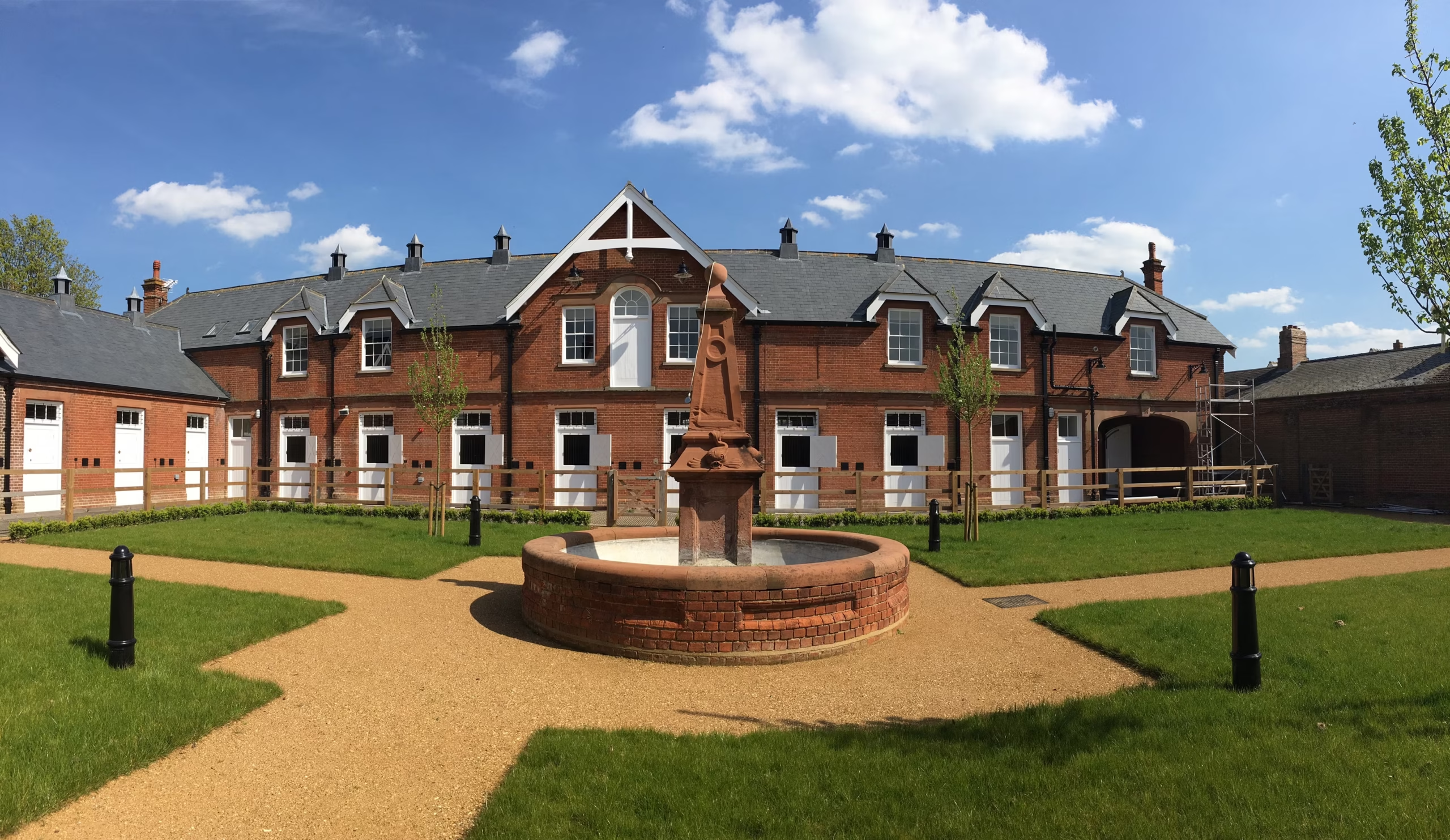
Stables and yards matter in Newmarket because racing is not staged only on race days. The town is a training environment first. The presence of horses is continuous: early mornings on the gallops, stable staff working seven days a week, a rhythm set by the needs of animals rather than the calendar of spectators. As parts of the palace complex took on equine functions, they remained tied to the town’s central purpose.
That continuity—royal horses to professional racehorses—helps explain why Palace House Newmarket feels so rooted in place. It did not merely survive as an inert relic. It remained useful.
Palace House and the story of labour: the people behind the sport
Racing is often narrated through winners: kings, wealthy owners, famous trainers, celebrated jockeys. Yet the reality of Newmarket has always depended on labour, much of it skilled, much of it under-recognised. Stable lads and lasses, grooms, farriers, vets, exercise riders, yard managers and those who maintain the gallops and heath are the connective tissue of the industry.
One reason Palace House Newmarket remains relevant is that it can help tell that fuller story. A royal palace might appear, at first glance, to be an elite space. But any palace depended on staff: cooks, servants, grooms, guards, messengers. The same is true of the racing yards that later occupied the area. Horses require constant care. The work is physical, repetitive, knowledgeable and, at times, risky.
Understanding Newmarket without acknowledging that workforce produces a distorted picture. It turns the town into a backdrop for spectacle rather than a place of employment and expertise. Palace House, positioned between royal past and racing present, is well placed to challenge that distortion.
It also draws attention to change over time. The conditions of stable work, the status of workers, the role of women in the industry, and the regulation of welfare and safety have all evolved. The buildings remain while the social history shifts, which is precisely what makes them useful as evidence.
The National Horseracing Museum and the modern use of Palace House Newmarket
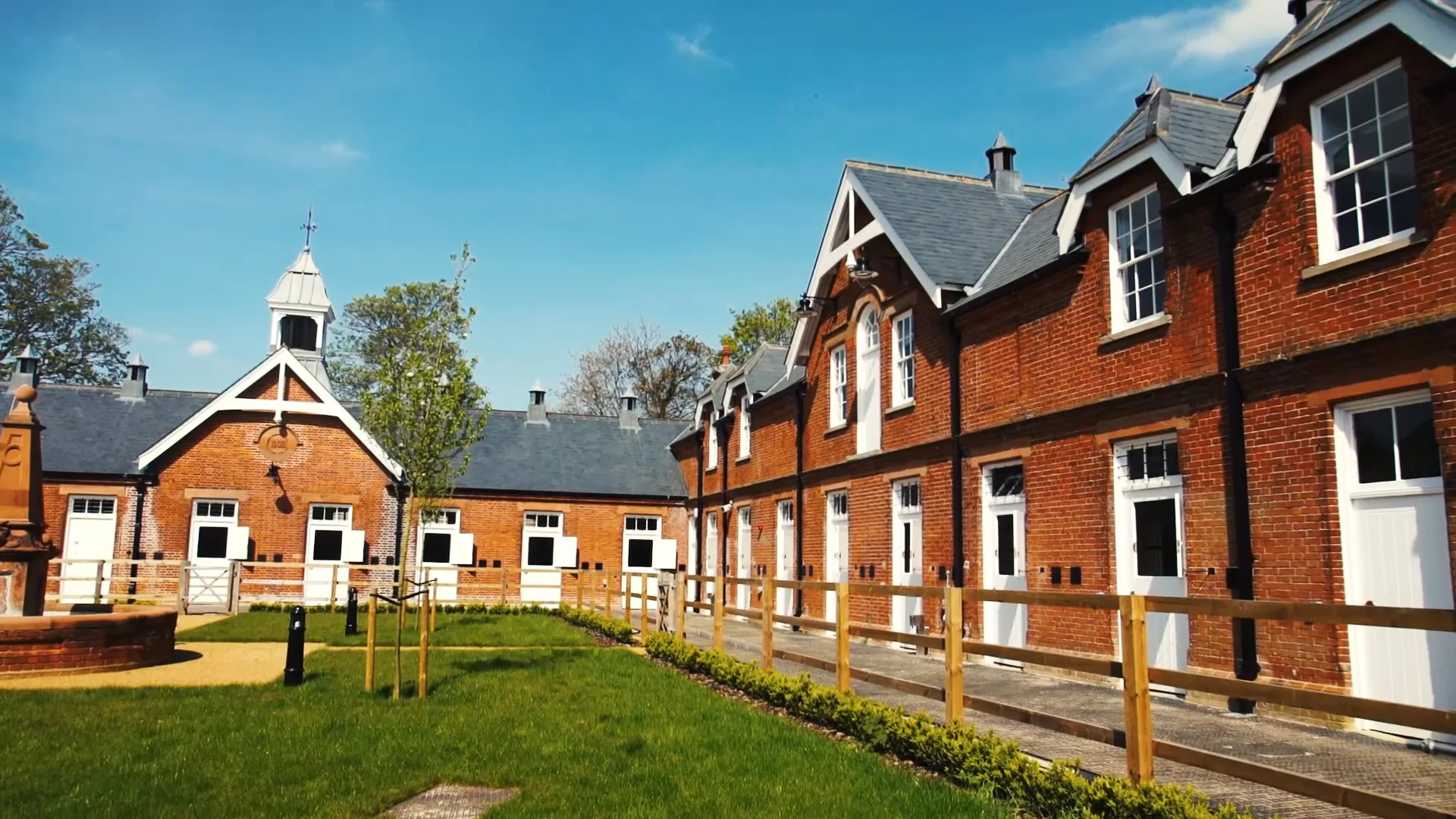
In the twenty-first century, Palace House Newmarket is closely associated with the National Horseracing Museum and the wider heritage presentation of racing in Britain. This pairing makes sense. Newmarket is the sport’s most symbolic location, and Palace House provides a historic anchor that can hold together themes of royalty, breeding, training, art and sporting culture.
For the public, this modern use shapes what Palace House means. It is no longer a private royal lodging. It is interpreted space: curated, explained and contextualised. The challenge for any museum based in historic buildings is balance. Too much interpretation can flatten the atmosphere of the place. Too little can leave visitors with pretty rooms and no understanding of why they matter.
The museum framework also allows Palace House Newmarket to connect to collections that would otherwise feel abstract: trophies, tack, racing silks, portraits, and the art that has long surrounded the sport. Racing has always attracted painters and patrons. It sits at the intersection of sport, money, aesthetics and national identity. Palace House, as a surviving royal element, strengthens that narrative by reminding visitors that the sport’s prestige was never solely self-made; it was fostered by power.
Racing, regulation and Newmarket’s institutions
Newmarket is not only where horses are trained and races are held. It is also where the sport has historically been governed and shaped. The Jockey Club, to take the most famous example, has long been associated with Newmarket and with the regulation and culture of British racing. The town also sits within a commercial ecosystem that includes sales, bloodstock operations and specialist services.
This institutional dimension matters when thinking about Palace House Newmarket because it reframes the building as part of a broader infrastructure of authority. A palace is, by nature, a site of control and hierarchy. Racing governance, though different in form, also concerns rules, standards and enforcement. The continuity is not exact, but it is suggestive. Newmarket has long been a place where elite decisions are made, whether about state affairs in the presence of a king, or about the direction and regulation of a sport with national importance.
That is one reason Palace House continues to resonate. It fits into a local pattern: power gathering in a place that is, geographically, not a capital city, yet culturally central to its field.
The town around the building: how Palace House sits within modern Newmarket
A historic building can feel isolated if its surroundings have been stripped away. Palace House Newmarket avoids that fate because Newmarket itself still revolves around horses. The building does not sit in a vacuum. It sits within a town that continues to produce the sounds, smells and routines that once made the palace relevant: the movement of horses, the presence of yards, the early morning industry.
At the same time, Newmarket has changed. It is more connected than it once was, with commuters and modern retail and the pressures of housing demand. The town’s public spaces must serve residents who have little involvement with racing as well as those whose working lives are dominated by it. Heritage sites must navigate that reality. They cannot assume universal interest, and they cannot allow the heritage narrative to become a substitute for the living community.
Palace House occupies a particularly sensitive position because it speaks to both identities. It is a royal remnant, which can encourage a romantic view of Newmarket as a historic playground of kings. It is also embedded in a working town where wages, housing costs and employment conditions matter. A serious interpretation holds those truths together rather than choosing the more comfortable one.
Why Palace House Newmarket matters in Britain’s wider heritage landscape
Britain is rich in palaces and in racing history, but it is rare to find them entwined in one place so directly. Palace House Newmarket matters because it complicates familiar heritage categories. It is not a grand palace preserved in splendid isolation. It is not merely an industrial or sporting site. It sits between them, showing how leisure, power and economy are intertwined.
It also contributes to a broader understanding of how royal sites operated. The monarchy’s relationship with place is often told through London and the great ceremonial centres. Newmarket reminds us that royal life was mobile and seasonal, and that monarchs shaped local economies through their choices about where to spend time. When a king invested attention in a town, the effects could be long-lasting.
For racing history, the building grounds a narrative that can otherwise drift into myth. People speak about Charles II, about “the home of racing”, about tradition. Palace House provides a material reference point that allows those claims to be examined rather than simply repeated.
Conclusion
Palace House Newmarket survives because it adapted. It moved from royal lodging to a building absorbed into the working landscape of racing, and it now serves as a focal point for interpreting a sport that is both culturally resonant and economically significant. Its value lies not in being a perfect palace, but in being an imperfect survivor: a fragment that still carries the weight of a whole history.
To understand Palace House Newmarket is to understand Newmarket itself as a place shaped by horses, by institutions, and by the long afterlife of royal attention. The building stands as evidence that heritage is not always a matter of preservation in aspic. Sometimes it is a matter of continuity through change, where a town’s defining activity keeps an old structure relevant long after its original purpose has gone.