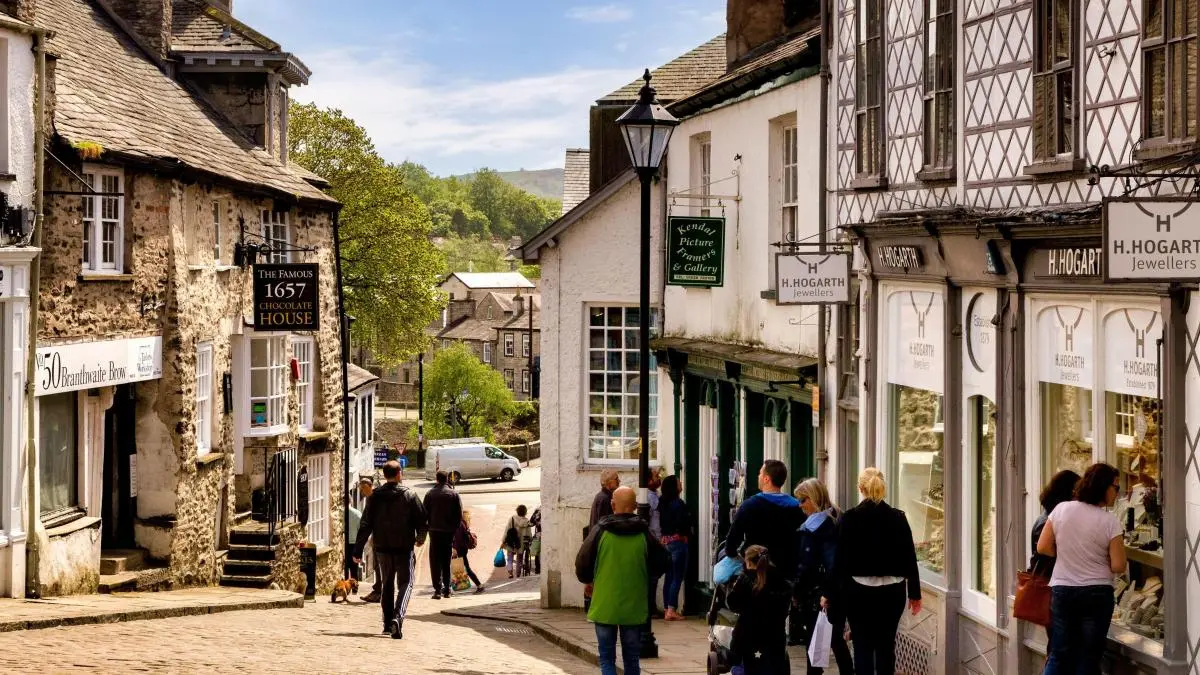
Kendal is the sort of place many people think they already understand. A market town at the edge of the Lake District, proud of its hills and stone streets, with a reputation for practicality and resilience. Yet when readers search for the population of Kendal, they are usually looking for more than a single headline figure. They want to know whether the town is growing or shrinking, who is moving in, how old the community is becoming, and what those shifts mean for housing, schools, health services and the local economy.
The challenge is that “Kendal” can mean different things in official statistics. The number changes depending on whether you count the built-up area, the civil parish, or the wider travel-to-work area that links Kendal to the M6 corridor and to nearby villages. It also changes depending on whether you are looking at census snapshots taken ten years apart or more frequently updated mid-year estimates.
This article sets out, carefully and transparently, what is known about the population of Kendal, why the figures sometimes appear to conflict, and what the trends suggest about the town’s direction of travel.
What do we mean by Kendal?
Ask a long-time resident where Kendal begins and ends and you may get an answer framed by hills, rivers and roads: the River Kent, the A6, the ridge lines above the town, the neighbourhoods that feel unmistakably “Kendal” as soon as you cross into them. Statisticians need clearer edges.
In modern UK data, Kendal is most often captured in three overlapping ways.
The first is the built-up area, an Office for National Statistics (ONS) concept designed to describe the continuous urban footprint rather than an administrative boundary. It is useful because it broadly matches how people experience the town on the ground: where the housing is, where streets join up, where the built form is contiguous.
The second is the civil parish or town area used for local governance. Parish boundaries can include bits of countryside and exclude parts of what many residents think of as “town”, depending on how boundaries have evolved.
The third is the wider functional area: the places whose residents commute into Kendal for work or education, and the services that Kendal provides for the surrounding district. That functional Kendal can include villages and rural communities that rely on the town’s shops, employment, GP surgeries, secondary schools and transport links.
These distinctions matter because the population of Kendal changes with the definition. When someone quotes a figure without saying which boundary is being used, confusion follows. The most reliable approach for public understanding is to start with the census measure for the built-up area or town area, then add context about the wider hinterland.
How many people live in Kendal today?
The most robust, comparable count of residents comes from the decennial census. The latest full census for England and Wales took place in March 2021. In that census, the Kendal built-up area recorded a population a little under 30,000 usual residents. Different publications and data tables can show slightly different totals depending on the exact geography selected, but the overall picture is consistent: Kendal sits in the high-twenties to around thirty thousand range.
This is the number most people are looking for when they search for the population of Kendal, because it represents the town as a lived, continuous settlement rather than a broader district. It also aligns with how Kendal is typically described: large enough to sustain a hospital, secondary schools, a substantial retail centre and a varied employment base, but not so large as to be a city.
To understand what that headline figure means, it helps to set it alongside the previous census. In 2011, Kendal’s population (again using the town’s built-up area definition) was in the high twenties, roughly the 27,000–28,000 bracket. Between 2011 and 2021 Kendal therefore appears to have grown modestly, adding a couple of thousand residents over the decade. That pace is neither explosive nor stagnant; it suggests a town that is gradually absorbing demand, influenced by a mix of local births and deaths, people moving in for work or lifestyle, and people moving out for education or cheaper housing.
Mid-year population estimates can offer more frequent updates, but at town level they are often modelled and less stable than the census. For clear, reliable statements, the census remains the anchor.
It is also worth noting what the census counts. It measures “usual residents” rather than everyone physically present on a given day. In a place like Kendal, which draws visitors and has a holiday economy, there can be a significant difference between the number of people staying overnight at peak times and the number who live there permanently. Second homes and holiday lets complicate the picture further. A property may be part of the housing stock but not a “usual residence”, which affects how local service demand is experienced compared with how the resident population is recorded.
So, if you want a straightforward answer, the population of Kendal is around 30,000. If you want to understand the town’s real pressures and rhythms, you also need to consider the daily inflow of commuters, the seasonal influx of visitors, and the housing that is not occupied year-round.
A brief history of Kendal’s population: growth, industry and the long shadow of geography
Kendal’s long-term population story is shaped by two forces that still matter today: its role as a market and service town for a large rural area, and its links to wider industrial and transport networks.
In the nineteenth century, Kendal grew as a centre of trade and manufacturing, with industries including textiles and the sort of small-scale production common to northern market towns. The arrival and expansion of rail and improved road connections altered Kendal’s position in the regional economy, changing who could travel in and out for work and how goods moved.
Over the twentieth century, the character of Kendal shifted. Like many towns, it experienced the decline of traditional manufacturing and an expansion of service sector employment. Its relationship with the Lake District became increasingly important, not only in tourism but in the town’s identity and housing market. Kendal’s role as a gateway town brought opportunity, but also exposure to wider economic forces and to national housing dynamics that do not always match local wages.
Population change over time is never just about how many people arrive. It is also about who stays. Kendal has long faced the familiar challenge of many attractive rural and semi-rural towns: young people leave for university or work in bigger cities, while older people are more likely to remain or move in. That can produce a town that grows slowly in total numbers but ages in composition, with significant implications for health and social care, the labour market and the availability of family housing.
The 2021 census sits within this longer story. A modest rise in the population of Kendal over the decade suggests that the town continues to draw residents, but not at a pace that would radically alter its scale. The more consequential changes are often within the population: age structure, household size, and the balance between permanent homes and other uses.
Who lives in Kendal? Age profile, households and the shape of everyday life
At town level, demographic detail is best drawn from census characteristics: age bands, household composition, and indicators such as economic activity and health. Kendal shares several traits with much of Cumbria and the wider rural North of England, while also standing out as a relatively dynamic local centre.
Ageing, but not uniformly
Cumbria is often discussed as an older county, and South Lakeland in particular has had a higher median age than the England average. Kendal, as the principal town of its immediate area, tends to have a slightly broader mix than the most rural parts of the district, but it still feels the pull of ageing demographics.
An older age profile can be read in several ways. It can indicate that people are living longer and staying put, that the town attracts retirees, or that younger adults are more likely to leave. In practice, it is usually a mixture.
For Kendal, the presence of secondary education, further education, retail and health employment, and a diverse small business environment can help retain working-age adults. But the gravitational pull of bigger urban centres for higher education and certain career paths remains strong. When young adults leave, the impact on the local population is not only numerical; it shapes the future labour supply, the demand for starter homes and rentals, and the vitality of the town centre.
Household size and housing patterns
Like many towns in the North and in rural England, Kendal has a substantial stock of family housing alongside terraces and flats. Over time, average household size across the UK has tended to fall, driven by more people living alone, smaller families, and ageing households. Kendal reflects this pattern.
A town can have a stable population while still experiencing acute housing pressure if household sizes fall. If more homes are occupied by one or two people, and if some properties are not lived in year-round, demand for housing can outstrip what the raw population figure suggests. That is why debates about Kendal’s housing supply often feel more intense than the headline population of Kendal might imply.
Ethnicity and diversity
Kendal, like much of Cumbria, remains less ethnically diverse than many parts of England. The census shows a predominantly White population, with diversity increasing gradually over time. The pace of change tends to be slower than in major cities, but it is still meaningful for public services, schools and community life, particularly in how institutions ensure they are welcoming and responsive to smaller minority groups.
Migration, commuting and the seasonal reality behind the numbers
A census count is a fixed point. Real towns are not static. Kendal’s population at 2am on a wet Tuesday in November is not the same as on a bright Saturday in July, and the people filling the streets are not all residents.
Commuting and the M6 corridor
Kendal sits close to the M6 and has rail connections via Oxenholme. That positioning makes it part of a wider labour market than its size might suggest. Some residents commute south towards Lancaster and the broader North West economy, while others commute within Cumbria, including to employment centres such as Barrow-in-Furness, depending on role and shift patterns.
Commuting cuts both ways. Kendal can export labour, meaning working-age residents live in town but earn elsewhere. It can also import workers from surrounding villages who come into Kendal for retail, education, health care and other services. The result is that daytime population and service demand are not perfectly captured by the resident population figure.
In-migration: lifestyle, work and later life
Kendal’s appeal is multi-layered. For some, it is about landscape and access to the Lakes without being in a national park village. For others, it is a practical town with supermarkets, schools and transport links, where you can still be within striking distance of rural life. Remote and hybrid working have added another dimension. When a job is no longer tied to a city office, towns like Kendal can seem a plausible base.
However, in-migration can be double-edged. It can bring skills, spending power and entrepreneurship. It can also put additional pressure on housing, especially if incomers are able to pay more than local workers. The effect is not simply a bigger population of Kendal; it can be a reconfiguration of who can afford to live within the town boundary.
The seasonal population
It is difficult to talk about Kendal without acknowledging tourism and the visitor economy. Even when the census counts “usual residents”, Kendal’s local services feel the presence of non-residents: day-trippers, holidaymakers, people staying in nearby accommodation, and those passing through on the way to the Lakes.
Seasonal population is not always captured in a single definitive statistic, but it is very real in practical terms. It affects traffic, demand for GP appointments, footfall in the centre, policing, and the strain on transport and car parking. It can also influence local politics, because residents judge the adequacy of services by lived experience, not by the resident population denominator used in funding formulas.
Housing, affordability and why the population figure can mislead
The link between population change and housing is often assumed to be direct: more people equals more homes. In Kendal the relationship is messier.
First, as noted, average household size matters. If the population of Kendal rises only slightly but the number of single-person or couple households increases, demand for dwellings can still rise sharply.
Second, housing is not always used as housing in the everyday sense. Second homes, holiday lets and short-term accommodation can reduce the supply available for residents without changing the dwelling count. A town can look well housed on paper while feeling short of homes in reality.
Third, affordability is not a mere by-product; it is a driver of demographic change. When housing costs rise faster than local wages, younger adults and families may move away or never manage to move in. That can contribute to an ageing population even if the total headcount remains steady. It can also alter the social mix of neighbourhoods, with long-term consequences for schools, community organisations and the labour market.
Kendal’s housing debate also intersects with planning constraints. The surrounding landscape, flood risk management along the River Kent, and the desire to protect character and green space all shape what can be built and where. Add in infrastructure capacity, from roads to GP surgeries, and it becomes clear that a simple “build more” or “build less” framing does not capture the trade-offs.
In this context, the population of Kendal is only the starting point. The harder question is what sort of population the town can sustain, and what kind of housing is required to keep it balanced: homes for key workers, rentals for young adults, family houses, accessible housing for older residents, and provisions that reduce the risk of hollowing out the resident community.
Public services: what population change means on the ground
Population statistics matter because they translate into the everyday business of running a town. A place of roughly 30,000 people sits at an awkward scale: large enough to need complex services, but small enough that it can struggle to secure the investment and specialist provision that bigger centres take for granted.
Health and care demand
An older age profile increases demand for health services, particularly primary care, community nursing and social care. It also increases the importance of accessible housing and transport. If older residents are dispersed across hilly neighbourhoods or outlying areas, the practical challenge of reaching appointments and accessing support grows.
At the same time, health services are influenced by a population that is not fully captured by “usual residents”. Seasonal visitors, day-trippers and commuters add to demand in ways that can be hard to plan for. Funding and workforce recruitment remain persistent challenges across rural and semi-rural England, and Kendal is not immune.
Schools and young families
Schools are sensitive to relatively small shifts in the number of children. A modest change in the population of Kendal can hide a sharper change in the number of school-age residents if the town’s age structure shifts. If young families are priced out, primary enrolments can fall even while the town grows overall.
Conversely, new housing developments can create localised surges in pupil numbers, putting pressure on specific schools. Planning for education therefore depends on granular data and on realistic assumptions about who new housing will actually house, not simply how many dwellings are approved.
Transport and mobility
Kendal’s transport pressures are shaped by geography and by movement patterns that extend beyond the resident population. Congestion can be driven by through-traffic, school runs, delivery vehicles, tourist inflows and commuter patterns, not only by the number of people who live within the town boundary.
Rail links and proximity to the M6 are assets, but they also make Kendal part of a wider regional system. That can increase demand for parking and station access, while also giving residents options that can reduce car dependence if services are reliable and frequent enough.
The local economy and employment: population as a workforce, not just a headcount
When the public hears “population”, it often sounds like a passive count. For local economies, it is an active ingredient: a workforce, a customer base, a pool of skills, and a set of needs that generate jobs in health, education, retail and public administration.
Kendal’s employment base is mixed. It includes retail and hospitality, professional services, manufacturing and logistics, education, health and care, and a range of small businesses. The town’s role as a service hub for surrounding communities means it supports jobs that would not exist in a purely residential settlement of similar size.
Demographics matter here. If the population of Kendal ages, employers can face recruitment difficulties, particularly in sectors that rely on younger workers, such as hospitality and entry-level care roles. If housing becomes unaffordable for staff on typical wages, labour shortages can emerge even when unemployment is low.
Remote work may partly offset this by enabling some residents to bring metropolitan salaries into the local economy. But it can also widen inequality and intensify housing pressure. The net effect depends on how many remote workers settle, what they earn, and whether the local housing market and infrastructure can absorb them without displacing existing residents.
Kendal compared with nearby places: size, role and regional context
Numbers make more sense when set beside other places. Kendal is not among England’s larger towns, but within Cumbria it plays an outsized role. It is bigger than many surrounding settlements and functions as a centre for shopping, services and employment for a broad rural catchment.
Compared with nearby towns, Kendal’s population places it in a middle category: substantial enough to have a recognisable urban core and multiple neighbourhoods, yet small enough for local changes to be felt quickly. A new employer, a housing development, or a shift in visitor patterns can visibly alter the town’s rhythm. That sensitivity is one reason population debates in places like Kendal often feel immediate and personal.
Administrative change also matters. Local government reorganisation in Cumbria has altered the way areas are grouped for decision-making and planning. While administrative structures do not change the underlying population, they can affect how data is presented, how budgets are allocated, and how priorities are set. Residents looking up the population of Kendal may find figures embedded in newer authority areas, which can make like-for-like comparisons harder without careful attention.
Reading the data properly: why different sources show different figures
It is common for readers to find multiple population totals for Kendal and wonder which is correct. Often, several are correct within their own definitions.
One figure might refer to the built-up area, another to a parish, and another to an electoral ward grouping. Some sources quote the 2021 census; others quote 2011; some use mid-year estimates, which are not always available at fine geographical levels with the same confidence.
There are also differences between “usual residents” and other counts. The census definition excludes some short-term residents. Students can be counted at their term-time address. People in communal establishments are included, but the way those establishments are coded can affect small-area totals.
The safest approach is to treat the population of Kendal as a band rather than a single immutable number, anchored by the census. For most practical purposes, describing Kendal as a town of around 30,000 residents is accurate and honest. When precision is needed, such as for planning, it becomes essential to specify the geography and the dataset.
What the trends suggest for the next decade
Predicting population change is harder than describing it, particularly in a time of economic uncertainty, shifting work patterns and changing migration flows. Still, several pressures are likely to shape Kendal’s next decade.
First, the ageing trend is unlikely to reverse quickly. Even if Kendal attracts some younger adults and families, the overall structure of Cumbria means that demand for health and care will remain prominent, and workforce planning will be a continuing concern.
Second, housing affordability will remain central. If the town is to retain a balanced population, it will need a mix of housing that matches local incomes. Otherwise, the population of Kendal may continue to grow modestly in total while becoming less diverse in age and occupation, with knock-on effects for local services and the economy.
Third, climate and infrastructure constraints will influence where growth can occur. Flood risk management, road capacity, and the resilience of utilities will all matter more as weather patterns become less predictable. These are not abstract concerns for Kendal; they shape planning decisions and therefore the town’s capacity to accommodate population change.
Finally, Kendal’s role as a service centre for its hinterland is likely to persist. Even if the resident population changes only gradually, the town’s daytime and seasonal population will continue to fluctuate with commuting and tourism. Any serious discussion of services, transport or policing needs to account for that moving target.
Conclusion
The population of Kendal is best understood not as a single trivia fact but as a lens on how the town works. On the most reliable measure, Kendal is a town of roughly 30,000 usual residents, and it has grown modestly since 2011. That growth, however, sits alongside more consequential shifts: an ageing profile, changing household patterns, and the pressure of housing costs in a place where demand is shaped by landscape, transport links and the wider visitor economy.
For residents and policymakers alike, the key question is less whether Kendal is “big” or “small” and more whether its population structure remains sustainable. A town can cope with gradual numerical growth if it can house its workforce, maintain services, and preserve the everyday functionality that makes it a place to live rather than merely a place to visit. Understanding the numbers properly, including what they do and do not count, is the first step in making those choices with clarity.