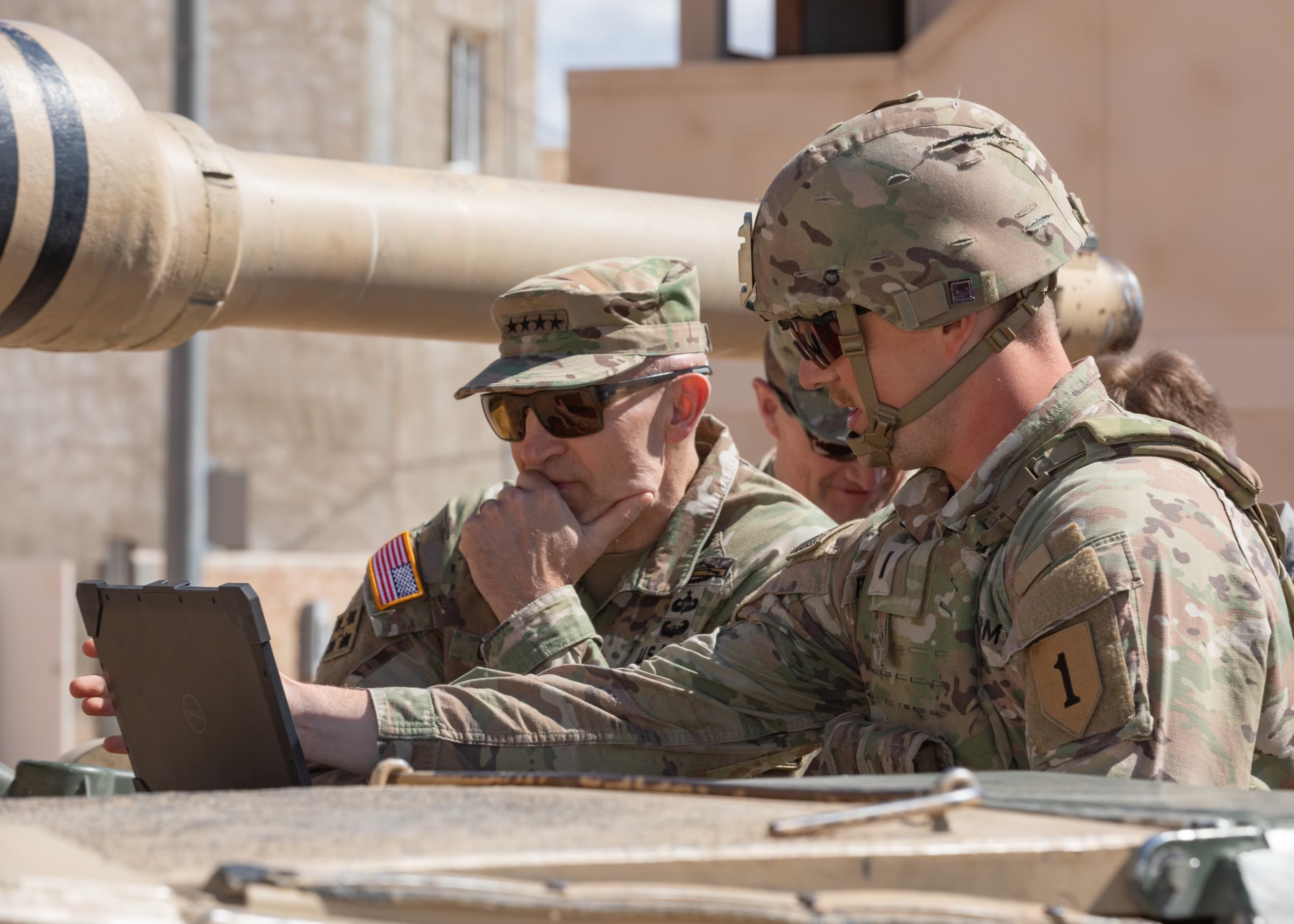
The United States Army equipment comprises a diverse array of vehicles, weapons, and technologies that serve crucial roles in modern warfare and defense strategies. As the backbone of military operations, this specialized gear is integral not only in direct combat situations but also in logistical, reconnaissance, and support tasks. Over the years, the evolution of US Army equipment has mirrored advancements in technology and shifts in military doctrine, ensuring that the armed forces remain capable of responding effectively to various threats.
Initially, US Army equipment was characterized by simplicity; however, as global conflicts escalated, so did the complexity and sophistication of the tools employed. Notable shifts began during World War II, leading to the increased mechanization of forces and the introduction of armored vehicles and artillery systems. The Cold War further propelled innovation, resulting in advanced weaponry such as guided missiles and modern aircraft designed for both air superiority and ground support. More recent conflicts in Iraq and Afghanistan prompted the development of lighter, more versatile gear, suitable for rapid deployment and urban warfare.
Today, US Army equipment encompasses everything from personal protective gear for soldiers to advanced armored fighting vehicles that enhance battlefield mobility and protection. Furthermore, emerging technologies such as drones and cyber warfare capabilities highlight the evolving nature of defense equipment. These advancements are not solely focused on battlefield effectiveness; they also emphasize sustainability and adaptability to counteract new forms of warfare.
The role of US Army equipment extends beyond tactical advantage—it is a fundamental element in maintaining national security. Constant assessments and updates to equipment ensure that the Army remains prepared for diverse challenges, reaffirming its commitment to safeguarding the nation. Understanding the significance of this equipment provides insight into how the US Army is equipped to face current and future threats effectively.
Categories of US Army Equipment
The United States Army utilizes a wide array of equipment that can be categorized into three primary groups: vehicles, weapons, and support systems. Each category plays an integral role in ensuring operational effectiveness and mission success.
Vehicles form the backbone of mobility for the US Army, facilitating the transport of personnel and equipment across varied terrains. This category includes a vast range of assets, from tactical vehicles like the Humvee to armored fighting vehicles such as the Bradley and the M1 Abrams tank. Each vehicle is designed with a specific purpose in mind, whether it is for reconnaissance, transport, or engaging enemy forces directly. The versatility of these vehicles allows the Army to maintain strategic advantages in both offensive and defensive operations.
Weapons comprise a critical part of US Army equipment, with this category encompassing everything from small arms to advanced missile systems. Infantry weapons include rifles, machine guns, and grenade launchers, designed for individual and squad-level engagements. At the same time, indirect fire systems like artillery and mortars provide heavy support capabilities. The armament ensures that soldiers are equipped with effective tools for various combat scenarios, greatly enhancing operational readiness and lethality.
Furthermore, support systems are essential to the operational framework of the Army. These systems include logistics and communication equipment, which enable seamless coordination and ensure troops have the necessary supplies to sustain operations. Key support equipment encompasses drones for surveillance, medical evacuation vehicles, and command and control systems that integrate various facets of military operations. Together, these support systems enhance situational awareness and operational effectiveness, allowing the Army to execute missions with precision.
In summary, each category of US Army equipment serves a distinct function, contributing to the overall strength and capability of military operations. By understanding these categories, one can appreciate the complexity and planning involved in equipping the Army for diverse challenges and missions.
Ground Vehicles: The Armor of the Army
Ground vehicles play a crucial role in the operational capabilities of the US Army, serving as the backbone of its combat forces. These vehicles are designed to transport troops, deliver supplies, and engage in direct combat, thereby enhancing the effectiveness of military operations on various terrains. Among the most prominent types of ground vehicles are tanks, armored personnel carriers (APCs), and logistical trucks, each equipped with technology tailored to optimize their performance.
Tanks, such as the M1 Abrams, are synonymous with heavy firepower and armored protection. The M1 Abrams is distinguished by its advanced armor and battlefield survivability features, which allow it to withstand direct hits from enemy fire. Equipped with a 120mm smoothbore cannon, this tank provides formidable offensive capabilities, making it a fearsome force on the battlefield. Additionally, modern tanks incorporate state-of-the-art targeting systems and sensors that enhance their operational effectiveness.
Armored personnel carriers, such as the M113 and the more recent MRAP (Mine-Resistant Ambush Protected) vehicles, are essential for troop transport. These vehicles are designed to protect soldiers from small arms fire and improvised explosive devices (IEDs), allowing for safer movement across hostile territories. The MRAP, in particular, utilizes a V-shaped hull to deflect blasts, reflecting a significant advancement in protective vehicle technology.
Logistical trucks, including the Family of Medium Tactical Vehicles (FMTV), are vital for the supply chain within the military. These trucks are engineered for rugged terrain, facilitating the transportation of essential supplies and equipment. Their adaptability allows them to serve in various roles, from cargo transport to troop movement.
In conclusion, the US Army’s ground vehicles, with their unique capabilities and advanced technologies, are indispensable for ensuring mission success. They serve not only as transport means but also as critical components of the Army’s operational strategy, enabling the delivery of effective defense and support in diverse combat scenarios.
Air Power: Helicopters and Drones
The capabilities of the US Army are significantly enhanced by the effective use of air power, which includes a diverse array of helicopters and drones. These aerial assets provide crucial advantages in terms of reconnaissance, transportation, and combat support. Helicopters, such as the Apache and Black Hawk, serve multiple roles ranging from attack missions and troop transport to medevac operations. Their versatility and ability to operate in various terrains enable rapid response and tactical flexibility during military operations.
Drones, or unmanned aerial vehicles (UAVs), have transformed aerial surveillance in modern warfare. Equipped with sophisticated sensors and cameras, they excel in gathering intelligence and providing situational awareness on the battlefield. Drones can conduct persistent surveillance over vast areas without putting personnel at risk. They are essential for monitoring enemy movements and assessing threats, enabling ground forces to make informed decisions based on real-time information.
The integration of these aerial platforms into the US Army’s operational framework enhances overall mission effectiveness. Helicopters ensure quick troop deployment and equipment transportation, while drones offer an unparalleled view of the battlefield, allowing commanders to strategize effectively. These technology-driven assets not only increase the Army’s operational efficiency but also improve safety for infantry personnel.
Moreover, the continuous evolution of US Army equipment in the aerial domain includes advancements in drone technology, with newer models featuring enhanced endurance, payload capacity, and autonomous capabilities. This ongoing development promises to further solidify the role of air power in supporting ground operations, fostering a comprehensive defense strategy that responds effectively to emerging threats.
Weaponry: The Arsenal of the Army
The arsenal of the United States Army is a comprehensive collection of weaponry designed to support the effectiveness and efficiency of its forces in diverse operational environments. From firearms to advanced artillery systems, US Army equipment is continually evolving, reflecting the latest advancements in technology and innovation. At the core of this arsenal are personal weapons such as rifles, handguns, and machine guns, which serve as the primary tools for infantry soldiers. The M4 carbine, a versatile and widely used rifle, exemplifies the effectiveness of modern firearm technology, offering enhanced accuracy, reliability, and adaptability to varying combat conditions.
In addition to individual firearms, the US Army employs crew-served weapons like the M240 machine gun and the MK19 grenade launcher, which provide suppressive fire capabilities to units during operations. Furthermore, advancements in precision-guided munitions, such as the Joint Direct Attack Munition (JDAM), have significantly improved strike accuracy while reducing collateral damage. These developments not only enhance the lethality of US Army equipment but also contribute to mission success by facilitating a more efficient use of resources.
Artillery systems, such as the M109 Paladin self-propelled howitzer, play a crucial role in providing indirect fire support to ground troops. The integration of digital fire control systems and automated processes has revolutionized artillery operations, enabling faster targeting and increased rate of fire. Additionally, the introduction of advanced missile systems, including the ATACMS and HIMARS, expands the Army’s reach, allowing for effective engagement of targets at extended ranges.
Overall, the continual advancements in weaponary technology ensure that US Army equipment remains at the forefront of military capability, enhancing soldier effectiveness and contributing to successful mission outcomes.
The Role of Support Equipment
In the multifaceted landscape of military operations, the role of support equipment within the US Army cannot be overstated. While combat gear often garners the most attention, it is the less glamorous yet equally vital non-combat equipment that underpins mission success and the welfare of soldiers. This category encompasses a broad array of essential tools, including communication systems, medical supplies, and logistical support, all of which are critical in modern warfare.
Communication systems stand as the backbone of operational efficiency. They ensure real-time sharing of information, enabling units to coordinate effectively and respond promptly to evolving threats. Advanced communication technologies allow for secured exchanges, ensuring that commanders maintain situational awareness while safeguarding sensitive information from adversaries. This level of connectivity dictates the success of tactical movements and strategic planning.
Equally important are the medical supplies, which make up a critical aspect of soldier welfare. The provision of first aid kits, trauma gear, and advanced medical equipment can mean the difference between life and death on the battlefield. The Army’s commitment to ensuring medics are equipped with the latest medical supplies demonstrates the understanding that the health and safety of soldiers directly correlate with mission efficacy. In conflict zones, timely medical intervention is vital for maintaining workforce strength and morale.
Finally, logistical support plays an indispensable role in sustaining military operations. This includes maintaining supply chains that deliver ammunition, food, fuel, and repair parts where they are needed when they are needed. The efficiency of logistical support directly impacts the army’s ability to deploy, resupply, and sustain its forces, affecting operational readiness and overall effectiveness.
Thus, the synergy of these non-combat elements significantly contributes to the effectiveness of US Army equipment, underlining the necessity for a robust hierarchy of support that allows for successful missions and promotes soldier welfare.
Innovation and Future Developments
The evolution of US Army equipment is driven by a commitment to innovation and the strategic importance of staying ahead in military technology. Current trends indicate a significant move towards integrating advanced technologies such as artificial intelligence, robotics, and autonomous systems into military operations. These innovations are not just supplementary; they are redefining how the army engages in warfare and conducts missions.
One prominent area of focus is the development of unmanned systems, including drones and ground robots, which are being increasingly employed for reconnaissance, surveillance, and even direct combat roles. These systems enhance operational efficiency while ensuring the safety of personnel. Furthermore, the US Army is actively investing in next-generation combat vehicles that boast improved armor, enhanced mobility, and advanced weapon systems, ultimately aimed at boosting battlefield effectiveness and soldier survivability.
Research and development initiatives are also exploring the incorporation of wearable technologies and augmented reality into soldier gear. Such advancements not only aim to improve situational awareness but also enhance the overall performance of troops in complex environments. The Army’s efforts in adopting improved communications and information-sharing technologies are indicative of a future where real-time data is at the core of tactical decision-making.
Alongside these technological advancements, the importance of cybersecurity cannot be overstated. As the reliance on digital systems increases, safeguarding US Army equipment against cyber threats becomes paramount, prompting further investment in protective measures and resilient infrastructure.
As the landscape of warfare continues to change, ongoing research and development will ensure that US Army equipment evolves accordingly, adapting to new challenges while maintaining a strategic edge in defense capabilities.
Training and Maintenance of Equipment
The effectiveness of the US Army is heavily reliant on the proficiency of its soldiers in operating and maintaining various types of equipment. Training processes are designed to ensure soldiers are thoroughly familiarized with the US Army equipment they will utilize in missions. This training includes both classroom instruction and hands-on experience, focusing on the technical aspects of equipment operation, safety protocols, and troubleshooting procedures.
New recruits undergo rigorous training at Basic Combat Training (BCT), where they learn fundamental skills that include understanding their assigned equipment. After completing BCT, soldiers typically attend Advanced Individual Training (AIT), tailored to their specific military occupation specialty (MOS). During AIT, they engage in comprehensive instruction on various systems, from weaponry to vehicles, gaining the necessary skills to effectively operate these vital tools.
Moreover, ongoing exercises and simulations help reinforce this knowledge, with soldiers engaging in scenario-based training that closely mimics real-life situations they may encounter on the battlefield. This advanced training not only builds confidence in using US Army equipment but also fosters teamwork and communication among soldiers.
The importance of maintenance cannot be overstated, as well-maintained equipment is crucial for mission success. Soldiers are trained to perform routine inspections and minor repairs, ensuring that equipment remains operational. The Army employs a robust support system, which includes field maintenance units and repair depots, to address more complex issues that may arise. These support systems play a vital role in equipment readiness, allowing units to focus on their tactical objectives without being hindered by equipment failures.
In conclusion, the effective training and maintenance of US Army equipment are integral to the operational success and overall readiness of military units. By providing soldiers with the necessary skills and support, the Army ensures that its personnel can fully leverage the advanced technologies available to them in combat environments.
Conclusion: The Strategic Importance of US Army Equipment
The United States Army stands as a formidable force, largely underpinned by its advanced equipment and technology. Throughout this discussion, we have explored how the diverse range of us army equipment not only enhances operational efficiency but also ensures readiness for a variety of combat scenarios. Key systems, including vehicles, weaponry, and communication tools, contribute to the Army’s capability to respond swiftly to threats and maintain national security.
Significantly, the evolution of us army equipment reflects changing warfare dynamics and the need for adaptability. From the introduction of armored vehicles designed for modern battlefield conditions to cutting-edge surveillance technologies, the ongoing investment in military assets underscores the Army’s commitment to maintaining a strategic advantage. This adaptability is essential for not only addressing current challenges but also anticipating future conflicts.
The integration of advanced technology into us army equipment enhances operational effectiveness, supporting troops in the field and ensuring that they have access to the best possible resources. This emphasis on innovation enables the Army to carry out its missions with a higher degree of success, thereby safeguarding the nation. As threats evolve, the flexibility and modernization of military equipment become increasingly vital, reaffirming the Army’s role as a guardian of American interests globally.
In conclusion, the strategic significance of us army equipment is multifaceted, contributing not only to military readiness but also to the overarching security of the nation. As we continue to witness advancements in technology, the importance of maintaining a well-equipped force will remain paramount in a rapidly changing global landscape.